Ebola Update and the State of Outbreak Preparedness
Event date
Speakers
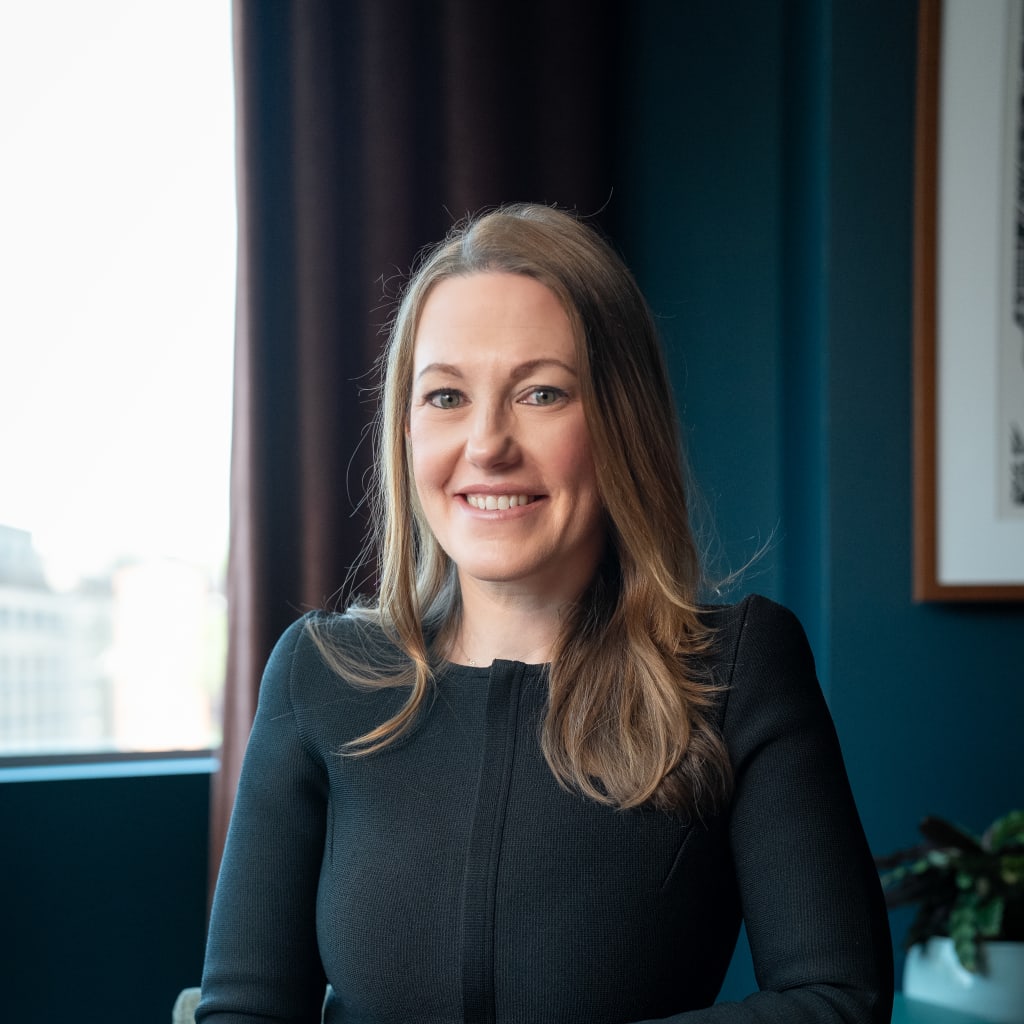 Stephanie PsakiCFR ExpertSenior Fellow for Global Health, Council on Foreign Relations
- Michael T. OsterholmDirector, Center for Infectious Disease, University of Minnesota
Presider
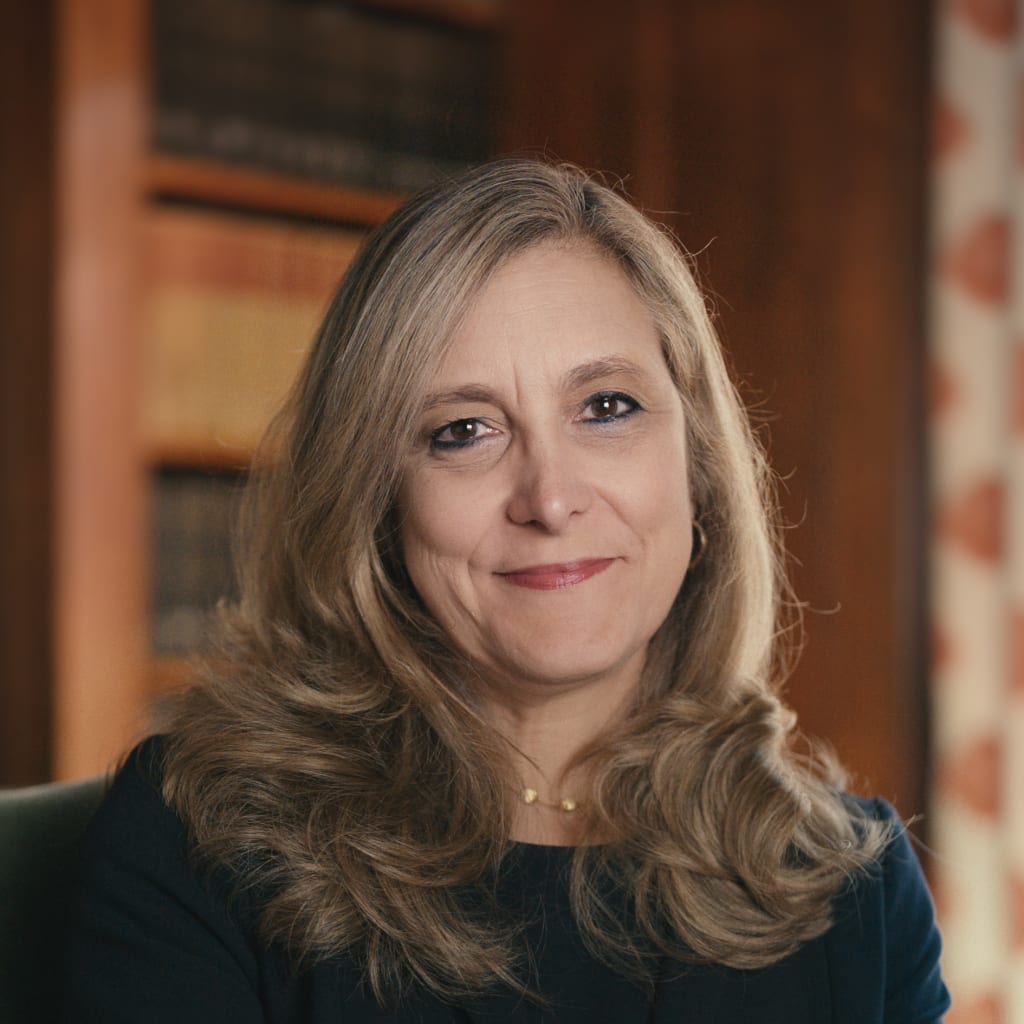 Vice President for National Program and Outreach, Council on Foreign Relations; CFR Member
Stephanie Psaki, senior fellow for global health and national security at CFR, provides an update on current infectious disease threats, including the latest developments on the Ebola outbreak, international health security coordination, and implications for U.S. public health policy and preparedness. Michael T. Osterholm, director of the Center for Infectious Disease Research and Policy at the University of Minnesota, discusses the on-the-ground state and local preparedness to respond to threats and practical implications for officials and their constituents. A question-and-answer session follows their opening remarks.
TRANSCRIPT
FASKIANOS: Thank you. Welcome to today’s Council on Foreign Relations State and Local Officials Webinar. I’m Irina Faskianos, vice president of the National Program and Outreach here at CFR.
CFR is an independent, nonpartisan national membership organization, think tank, educator, and publisher focused on U.S. foreign policy. CFR generates policy-relevant ideas and analysis, convenes experts and policymakers, and is also the publisher of Foreign Affairs magazine. As always, CFR takes no institutional positions on matters of policy.
Through our State and Local Officials Initiative, CFR serves as a resource on pressing international issues affecting the priorities and agendas of state and local governments by providing background and analysis on a wide range of policy topics. Thank you for joining today’s discussion. We’re delighted to have nearly 500 participants from forty-nine states and territories registered for today’s conversation. Again, today’s discussion will be on the record, and the video and transcript will be posted on our website after the fact at CFR.org.
With that, please join me in welcoming Stephanie Psaki and Michael Osterholm to discuss the Ebola outbreak in Central Africa and general public health response and preparedness in the United States. We’ve shared their bios with you, so I’ll just give a few highlights.
Dr. Stephanie Psaki is a senior fellow for global health and national security here at CFR, where she focuses on health security and the intersection of global health, U.S. foreign policy, and national security. She previously served as the inaugural U.S. coordinator for global health security on the National Security Council and she has written on global health security and U.S. foreign policy in the Atlantic, Time, Stat News, Vox, among others. And her research has been published in the British Medical Journal and the Lancet, among other publications as well.
Michael Osterholm is the Regents professor and director of the Center for Infectious Disease Research and Policy at the University of Minnesota, where he’s a leading expert on infectious disease threats, pandemic preparedness, and public health policy. About a year ago, he launched the Vaccine Integrity Project at the University of Minnesota. And he is the author of the New York Times bestseller, Deadliest Enemy: Our War Against Killer Germs. He is also a member of the National Academy of Medicine and has served as an advisor to the CDC, NIH, FDA, WHO, and the Department of Defense. So thank you both for being with us to unpack and talk about these issues.
Stephanie, I thought we could begin with you to give us a sense of where the Ebola outbreak stands right now, how serious is the threat and how does it compare to previous outbreaks in terms of scale and complexity, and if there are things that you’re more worried about.
PSAKI: Great. Thanks. Thanks for having me. And it’s great that there is so much interest in this topic. I’m really looking forward to hearing the questions and engaging in discussion.
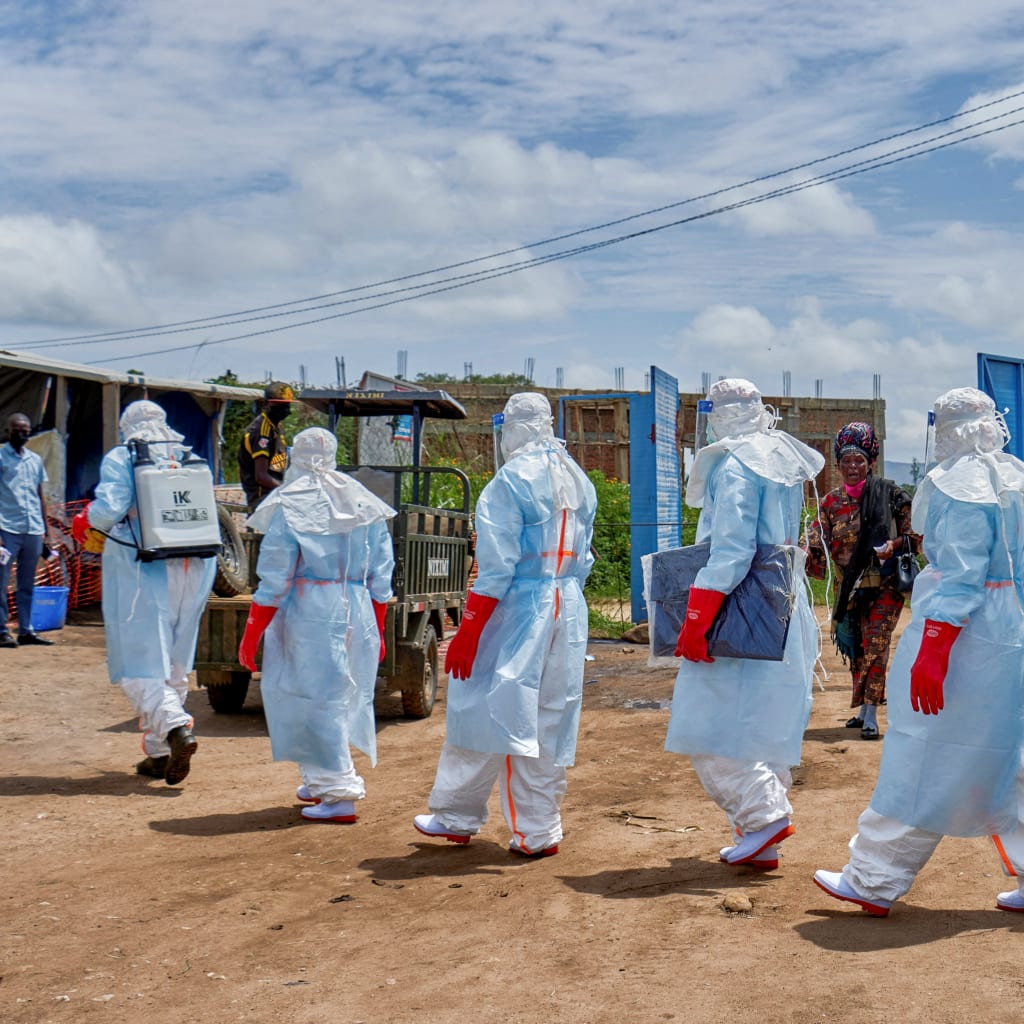
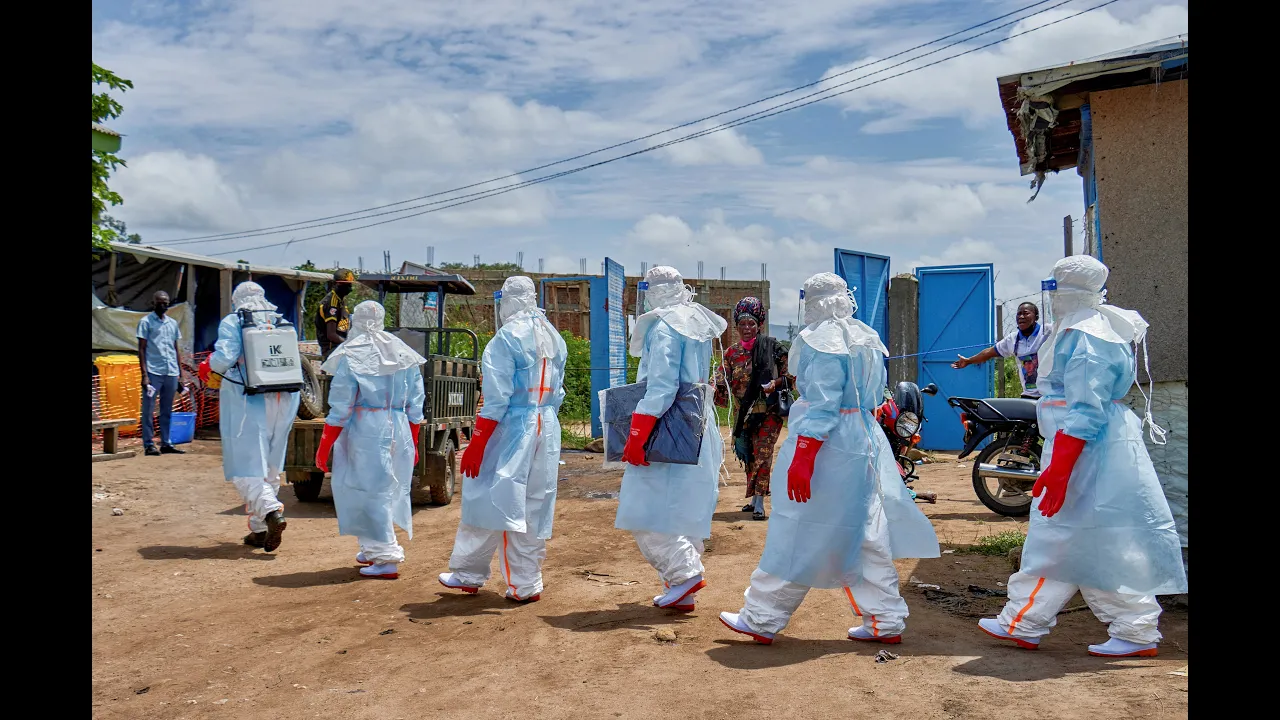
So let me just start by framing where we are. At a high level, this is the third-largest Ebola outbreak in history. And modeling from CDC and others suggests that it’s on track to be the second largest, or maybe the largest Ebola outbreak in history. It’s the seventeenth Ebola outbreak that has happened in the Democratic Republic of the Congo, which is where it started.
And as of June 22—and the data are regularly updated on the CDC website—but as of June 22 there were 1,048 cases in DRC and 267 confirmed deaths in DRC, as well as twenty confirmed cases and two confirmed deaths in Uganda, and then a couple other—or, one other suspected case in Uganda. And then as of this morning or yesterday, there is a confirmed case in France, which is in a physician who was helping with the response and traveled back to France. And that person is now in isolation and receiving treatment in France.
One of the things that is unique, not in a good way, about this Ebola outbreak is that it was already one of the largest in history at the time that it was detected. So it was much larger than any other Ebola outbreak in history has been at the time of detection. And that suggests that it was circulating undetected for weeks or months before it was identified, which is part of the reason that it is really difficult to contain now. Some of CDC’s recent modeling suggests that the outbreak started perhaps in February, with the first case spilling over into a human. Which means that it would have been circulating in DRC for about three months before it was confirmed.
So the way that it was confirmed is that there was a cluster of cases, suspicious deaths and severe illness, in a hospital in Bunia health zone, which is in northeastern DRC very close to the border with Uganda, Rwanda, South Sudan, and Burundi. And those cases, those samples, were tested. But the tests that are used frequently in the field in DRC do not easily pick up this species of Ebola, which is not a common species. So those samples were transported to the capital city and eventually tested and sequenced to identify the species of Ebola that’s spreading.
Because this is a less common species of Ebola, the Bundibugyo species, there are no approved vaccines or treatments for this strain of Ebola. When it has spread in the past—there have been to past outbreaks of this species—the case fatality rate, so the percent of people who were sick who then died, was between 30 and 50 percent. So it’s similar to the species of Ebola that drove the West Africa Ebola outbreak that many of us are familiar with in 2014, which was the largest in history.
Just a couple other pieces to flag in terms of the difficulties in responding to this Ebola outbreak. It is occurring, as I mentioned, in an area of DRC, this northeastern area of DRC, that borders several other countries. Those borders are normally pretty porous borders, to Uganda, Rwanda, Burundi, and South Sudan. Rwanda and Uganda, who have—I mean, Rwanda by far, but then Uganda, who have very strong health systems that have responded quickly to outbreaks like this in the past, have closed down their borders and now have pretty rigorous screening protocols in place.
Burundi and South Sudan have different types of challenges, but South Sudan in particular has a lot of refugee populations and an ongoing conflict. There are also refugee populations that are living in the eastern areas of DRC. So just in terms of conflict, and instability, and movement of populations, this is very difficult. There’s also an ongoing conflict and people who—in the areas where this outbreak is happening.
And the director general of WHO recently traveled to the area. And what he shared was that the communities in the area said this is not their top priority because they have several other pressing health issues, including measles and malaria, that they are seeing children and community members die of, and there’s an ongoing conflict which they feel is the biggest threat to their health. So in thinking about how to work with communities to effectively contain and respond to this outbreak, it’s really important to understand the competing demands that are facing those communities, very similar to how we need to address the competing demands facing communities in the United States.
I will just end by saying there are no known cases in the U.S. And I know Mike is going to talk much more about the U.S. situation. The federal government, the Trump administration, has taken a series of actions to respond to the outbreak in DRC, including surging funding to the response and working in collaboration with partners who are involved in the response, as well as putting some travel screening measures in place, warning about travel to the region, and sharing guidance with clinicians in the U.S. about the threat. So maybe I will stop there and turn over to Mike.
FASKIANOS: Thanks. Mike, yeah, if you could talk about the precautions that have been taken to mitigate the spread here, and how prepared the U.S. is to detect and respond to infectious disease threats from abroad.
OSTERHOLM: Well, first of all, thank you very much for having me. And that was a wonderful overview, Stephanie. Thank you. You’ve covered a lot of ground there.
I think what’s really important to understand is we have a history with Ebola. And what I mean by that is, if you look over the past decade-plus we actually have encountered Ebola in a very major way on the African continent, while at the same time it not becoming a major public health issue for the rest of the world. And I think oftentimes the public gets confused by the media when they hear about bloody eyeballs and all these deaths that are occurring. That must mean it’s coming to see us. And what we have to help people understand is that this is not an airborne-transmitted disease at this point. We have no evidence of that. That’s what distinguishes it from diseases like COVID, ones where we have immediate concern if this virus shows up anywhere in the world. Oh my gosh, it could be anywhere in the world tomorrow. That’s not going to be the case here. So where it’s bad, it’s really bad. Where it’s not bad, it’s not bad.
And if you look back on the 2014-16 outbreak, and look at even that with transmission here in the United States—which there was limited. You may remember there was one individual who came from Liberia who went to Dallas, Texas, actually stayed in a rental apartment with a number of other individuals while he began developing symptoms, and finally was hospitalized. And it was only during the hospitalization that—when he was critically ill—that there was evidence of transmission, where there was inadequate protective equipment used by the healthcare workers and they became infected. But he spent days, literally, in his earliest symptoms in close contact with people in this apartment building, and there was no transmission.
And so I want to point out that one of the things that is important to remember about Ebola, we do know how to handle this. If we can get to individuals who are even clinically ill, but early in their illness, then we can actually interrupt any potential future transmission by providing good protective equipment. And I might add that there is some limited data coming out that shows that the actual level of virus in the cases of Bundibugyo virus are actually lower than what we saw with the Zaire or Sudan strains, which means that they’re probably less infectious overall. Now, that’s not a consolation for Africa, because there, where there is very significant contact with bodies, people living in the homes and so forth together, there there is a lot of transmission. So I don’t want to confuse people into saying that there’s not going to be transmission in Africa. There is.
Now, you asked about what can we do here in the United States. We do have surveillance in place in state and local health departments, as we would normally every time that any kind of crisis shows up. There are obviously border checks going on. There’s restrictions on coming into the United States, per where you are at, you know, previously in your travels. But I would have to say at this point, one of the things that is concerning to me is the fact that we are really hanging on by a thread today for much of the public health funding in this country. When you realize that 94-plus percent of all the support the state and local health departments get for disease surveillance is federal money. And during the earliest days of this administration, we looked at what was going to be a claw back for much of that money, as well as not new money coming down.
Now, fortunately, Congress has interceded and we do now have a better source of that. But I don’t think people realize how fragile the infectious disease surveillance system is in this country. And let me just illustrate that by what’s happening with the world games. The world games, which estimates that there’ll be more than six million people coming to the United States for these games, there has been surveillance set up for this, all on a voluntary basis. Dr. Rebecca Katz at Georgetown University is a hero, because she literally, with nickels and dimes, put together a response activity at Georgetown having companies that are doing wastewater sampling voluntarily providing data. There was no national oversight of this or planning. So I want to point out that because Ebola, again, we can clearly respond to it in a way that is not a respiratory transmitted disease, we are still very fragile in this country. And sometimes we think we have much more in place than we really do.
So this is why continuing to monitor this situation and understanding that we don’t need to, first of all, have a panic mode if we do see a case show up in this country, but at the same time we have to be very concerned. And I think Stephanie laid it out very nicely. What we have to understand is the conditions right now on the ground in DRC and those adjoining countries are absolutely horrible. You know, there are many locations there where 80 percent of the citizens have no safe water sources. Now imagine trying to conduct good public health and surveillance in an environment like that, where you have the civil unrest, et cetera. So this is going to be a challenge. And I think there’s every reason to believe that this could be an outbreak nearly as large, if not larger, than we saw in 2014-16, just because of the inability to respond with a more comprehensive organization.
FASKIANOS: Great. Thank you both for that overview. Let’s go now to all of you for your questions and comments, and what you’re seeing in your own communities.
(Gives queuing instructions.)
OK. We have a first hand from Representative Eliza Hamrick. Or maybe that was a mistake. Put down your hand? I think the representative clicked on it by mistake. (Laughs.)
So let’s see. All right. So we have a written question, I’m not sure from whom, but: Where would you be most concerned in the context of today’s discussion related to the surveillance funding deficits?
OSTERHOLM: Well, as it relates specifically to the issue of Ebola, it really is, I would say, the healthcare interface. By the time someone is likely to be infectious with Ebola, they’re going to be clinically ill in such a way that they’re going to need to seek medical care. What we don’t want to have something happen is somebody actually be admitted to a hospital, somehow people do not recognize a travel history or exposure history that would put them at risk for Ebola, and then we see additional transmission at that institution. So, I mean, I think it’s today really a requirement that we routinely ask people, have you been traveling lately?
You know, I went in for a routine medical check last week and the first question was, have you traveled out of the country the last thirty days? And I think that that was a very thoughtful thing. And so I think we want to understand that. If we can do that, that by itself is going to be very helpful in triaging is this an individual we need to be concerned about with Ebola or, as Stephanie said very nicely, or is this someone who might have measles? Which I would just, also, be very concerned about.
PSAKI: Yeah. And I was going to add on the international travel side.
FASKIANOS: Yeah, go ahead, Stephanie.
PSAKI: I mean, I think my strongest reaction when this outbreak was announced was that it is a very concerning indicator of how unprepared we are to detect a threat that would pose a much more immediate risk to Americans. Because, as I said, this is the seventeenth Ebola outbreak in DRC. It’s very predictable. And we should be—we should have the ability, whether it’s through partners, multilateral institutions, or through U.S. government people on the ground, to be watching very, very closely to see whether there is a threat of an Ebola outbreak in DRC, of all countries. This is kind of low-hanging fruit in terms of surveillance. So the fact that this was circulating, potentially for three months without—never mind the U.S. government—but any actor identifying it is very, very concerning. Because the real threat, as Mike is saying, that is going to threaten Americans, or something that could become the next pandemic, is respiratory transmission that spreads much more quickly. And by the time you realize it’s there, three months later, it’s spread around the world.
FASKIANOS: Thank you.
I’m going to go back to Colorado State Representative Eliza Hamrick. I think we were having audio issues. Let’s try again and see if you can unmute. No? I don’t think there’s anything we can do on our side, so if you want to type your question in then we will—we’ll take it that way. And sorry about that, since—
Q: I think I’m—am I on now?
OSTERHOLM: Yeah.
FASKIANOS: Oh, you are on now. Yes. Great.
Q: So, yeah, you all needed to send me the unmute button. I’m not sure if other people are dealing with this, but on Zoom there’s no microphone. And so I had—you have to sort of—when someone raises their hand, you have to send them the unmute button, if that makes sense.
FASKIANOS: Got it. Thank you.
Q: Anyway. Thank you so much. I appreciate it.
So, USAID and the huge cuts to that, I worry about that and its connection to this latest outbreak. You went into how it was circulating undetected for three months. I’m just wondering the impact of those cuts. And then you also mentioned the federal dollars for disease prevention and infectious disease protocols have been really slashed. Just commenting on that and what we can do. Thank you.
PSAKI: So I can—I can respond on the USAID question. I mean, the system that we had in place before was a multilayered system. And that’s really what we need for any type of national security threat, whether it’s a biological threat or otherwise. So the system that we had before was USAID staff presence on the ground, USAID partners operating throughout the country, including the areas of the country where this outbreak is occurring, CDC presence on the ground, and close collaboration with the Ministry of Health so that there are trusted relationships and you’re notified quickly, membership of the World Health organization and close collaboration with the World Health Organization, you know, and a variety of other ways, you know, partnerships through the private sector who are operating in-country with other multilateral institutions.
So there were five or six people who, you know, are institutions who could have notified us, and I think would have notified us under the previous system, that were in place. Do we need exactly that system to have comprehensive surveillance? Not necessarily, but I think the fact that this was circulating for three months to me, as someone who sat in the seat of tracking threats around the world, this absolutely would not have been circulating for three months with the system we had previously. We can build a better system. I think we should build a better system that’s not so dependent on individual relationships and people getting a phone call. But right now, it really looks as if that system has been broken and we don’t have something better in its place.
OSTERHOLM: And if I could also add, I think that the importance of everyday infrastructure, that may seem as if it’s just routine, actually can be vital. And what I mean by that is, if you look, there’s been a number of stories in the media about individuals who actually worked at health clinics that were supported by USAID and even PEPFAR, that basically would have been what—exactly where Stephanie said. They would have seen it much earlier and said, ah, something’s not right here. One of the most painful stories was an interview that I read recently of a physician who was supported by USAID that basically got fired, they had to shut down, they didn’t have resources, and it was now gold mining as the only option that he had as a way to make a living. He wasn’t being a physician in a clinic anymore. When you have that kind of lack of infrastructure, that was actually provided for by USAID, that was a dividend issue where not only did you help take care of people with routine illnesses like malaria and so forth, but they were the smoke alarm sentinels that could pick up these other things. So we lost a lot there.
I think the other part of this is, is that we do this so often—we basically wait until the crisis to respond. Ten years ago our center, with support from several foundations of the World Health Organization, following the 2014-16 epidemic, put together a vaccine roadmap process where we identified what are the needs we have right now for Ebola-related vaccines, what will it take to get us to that point of having them on a routine basis? And this very disease, the Bundibugyo Ebola came up as we need to further the vaccine work and to make those available, like we have started to do with Zaire and Sudan. And it languished. It went nowhere, even though you could have predicted with some accuracy, like, saying, yeah, Florida is going to get hit by a hurricane someday. I can’t tell you when, but it’s going to happen. We knew that these things are going to happen. Now we’re scrambling to try to pull together the kinds of global resources to say we got to try to fast-forward a vaccine. And I want to be clear. We don’t have to have a vaccine to bring this outbreak under control. We proved that in 2014-16. But I can only tell you what it would be like in terms of an advantage if we had effective treatments and we had effective vaccines.
And the final piece I just want to add, because I think this goes to the very heart of what we’re doing and how we can expect to have support for our response in the future. As many of you know, yesterday Kenya announced that they were no longer going to allow the building of the medical clinic that would take care of American physicians, nurses, et cetera, who might come to help but who end up having exposures or actually getting infected with Ebola while on the job. Now, I got to say, I don’t know, but how many people from the United States would want to volunteer in a setting where if they, in fact, did have an exposure or were infected, they were not being allowed to come back to the United States? Now that may change. There may be reasons the administration will reconsider that point. But right now, that seems to me to be a major deterrent to getting the kind of dedicated healthcare workers who are willing to give up their time, put themselves in harm’s way, and with only one question. They ask, please take care of me if something happens to me. And we’re not going to be in a position to do that right now. I think that is a huge issue and will only amplify our lack of response in the days ahead.
FASKIANOS: Thank you.
I’m going to take a written question from Joseph Natko, who’s the assistant to the mayor for emergency management in the city of Akron, Ohio: How do we best protect our first responder community? PPE equipment, ambulance, sanitation, et cetera? We saw these issues in the 2014—sorry—2014 to 2016 outbreak in a local community in Ohio.
OSTERHOLM: Well, again, I come back to the fact that getting a good history is, first, very important. I would treat someone as a potential suspect cases if the symptoms match up, and they surely had a travel history. Or if someone who did not have a travel history but had a known exposure to somebody who likely had Ebola virus infection. And that early ascertainment is critical in how you manage it. Now, you can’t manage each case as if you know ahead of time what it’s going to be. And if you don’t know, then you have to take more extreme measures. But there’s nothing magical about containing the virus for somebody who’s infected with it and keeping them from spreading it to others. It’s just good healthcare infection control type practices.
Body fluids are very critical and important. Yes, it would be good if they potentially wore a mask. But even there we don’t have data today that says respiratory transmissions is an important mechanism for transmission. So I would say this is to me no different, in a sense, than many other infectious diseases we deal with. It’s just the one difference is it has a much higher mortality rate. And so whether I’m dealing with a hepatitis B virus infection case, which I’d be worried about a blood-borne exposure, or I’m dealing with an Ebola case, you’re really dealing with them in the same way. So it’s not extraordinary new measures that need to be taken.
FASKIANOS: Great.
If you could just go back over how exactly is the disease transmitted, there’s one question about that. And then another question about how many different viral variants are there, and why is this spreading so much more quickly.
OSTERHOLM: Well, first of all, let me just say that it’s all about body fluid contact. Meaning that, you know, if I have hands that are not covered with some kind of protective glove and I’m touching an individual who’s infected, whether it be a body fluid from blood—you know, one of the hallmarks is often bleeding out of the mouth and so forth—or even just the body fluids as such, that’s when exposure occurs. And so it’s not occurring because you’re in the same room with someone. It’s not occurring because of the fact that you’re breathing in air that they potentially breathe in. It’s just body fluid contact. And I think the issue—there’s five different strains of Ebola. The two most frequently encountered ones are, of course, what we saw in the 2014 outbreak, was Zaire and then also was Sudan, and now Bundibugyo. And from a standpoint though of what is the risk down the road of new strains emerging, I don’t think that we’re going to see that.
But I always remind people that one of the most important books on infectious disease epidemiology ever written was The Hot Zone by Richard Preston back in the early 1990s, that turned many of the people who are in professional jobs in infectious disease today—got into it because reading Richard Preston’s book back then. And that was actually the Reston virus Ebola. And so that I don’t expect we’re going to see more of that happening, but it could. Right now, though, we need to keep our eye on the ball with Bundibugyo and, of course, with the Zaire strain, which are going to still continue to be the primary source of virus.
PSAKI: Just on the question about spread, it’s not clear that this is spreading faster than you would expect. I think the issue, again, is the delayed detection of this outbreak, and then the limited public health measures to contain it, particularly immediately. I think it’s getting a little bit better, but it’s also not at a sufficient level. So I think what happened most likely is that it was spreading for weeks or months into communities and households that were unknown. It was confirmed, and then there are people who came forward who had symptoms because they realized there was an Ebola outbreak. And they’re still trying to catch up on who actually was exposed in those first few generations of cases.
The question now is, you know, in terms of looking at the pace of spread, how quickly can we get comprehensive public health measures in place? So, for example, you want every single contact of every case to be followed up for two incubation periods, forty-two days. We’re not at that level yet. So how quickly can you get those measures in place to contain it? And then, do you see the spread slowing down once you have that full system in place?
OSTERHOLM: And if I could just add, because that’s a very important point that Stephanie’s making. And I’d also like to add, we often don’t appreciate what it’s like to live in a place like DRC, where if you look at any of the pictures you see you see body to body to body every day. If you look at the gold mining, and you see all these hundreds and hundreds of people literally shoulder to shoulder. There is a lot of physical contact that occurs just by living in those kind of conditions. And so if you had to imagine the spread of the same virus as there in a place like the United States, it’s just totally different in terms of what the risk of exposure is by contact. And that’s what really facilitates transmission in Africa is contact.
And then the second thing is movement of populations. There is a great deal of migration that occurs all through Central Africa. And so they may not be flying on airplanes, but they’re flying even more effectively on the ground. And so one of the other challenges we have is how do we do contact tracing—as Stephanie pointed out, that is the hallmark response, contact tracing. Well, how do you follow up on people? Where do you get in contact with them? And so that only adds to the problem. And we’re getting different reports out of DRC right now, but in some cases we’re seeing only 25 to 30 percent of the people even being contact traced because they don’t have additional resources where they can identify who the other people were. That is going to allow this thing to continue to spread and, in some cases, even greatly accelerate.
FASKIANOS: So, continuing in that vein, Larry Greenblatt, a state health officer in North Carolina, writes: I understand that travelers to the U.S. from DRC or other involved countries who are considered low risk for Ebola exposure are being asked to monitor symptoms and are in routine contact with local health departments. How confident should we be that the system will detect symptoms early and protect others in the community?
PSAKI: Well, so I can—I can describe exactly what happens in terms of the monitoring and funneling of flights, because we did this a number of times with other outbreaks. And then Mike might have thoughts on level of confidence. So I mean, first of all, it’s important to say that there’s not a huge volume of travelers entering the U.S. from the countries that we’re talking about—DRC in particular, a little bit more from Uganda. So I don’t have the latest numbers, but it’s somewhere in the range of, you know, 150 to 200 people a day, which is very low relative to other countries that we would look at. The vast majority of those travelers entering the U.S. who have been in these countries are Americans or U.S. passport holders, because they’re often working in the region and returning. So the travel measure in place to stop people who are not U.S. passport holders from entering has really very little public health value.
The most likely scenario in terms of an Ebola case in the U.S. is what Mike was referencing from 2014 and what has happened in France, which is that you have a clinician or someone else who’s volunteering as part of the response. They travel back. They’re being very closely monitored because you know that they were exposed potentially. And then you would know very quickly when they develop symptoms. And, as Mike said, this is not transmitted the way that COVID is transmitted. So I think for the group of people, which I think is a very small group of people, who are not clinicians volunteering in the Ebola response and returning to the U.S. right now, I think monitoring at home and, you know, reporting out—and often it’s CDC will show up at their door, we’ll call them every day to make sure they get an update—is a reasonable public health approach, from my perspective. Whether that means there will be zero cases, I don’t think we can commit to that. I think it’s possible that there will be cases, as there were in the 2014 outbreak. But, Mike, what are your thoughts on—
OSTERHOLM: No, I think you said it very, very nicely. I would add one additional piece that is an incentive to find these individuals, because if I’m someone who is potentially coming down with Ebola, and I know that, with my very first signs and symptoms I want to be hospitalized because I know that my outcome is going to be much better if I’m hospitalized early. So I have every best interest for myself to be detected so that I can access that kind of health care. So I think I hear people often say, well, people won’t report, they won’t tell you. You know, if I think that this is what’s going to save my life, you better damn bet I’m going to report.
PSAKI: Yeah. And this is—just to add to that—I think this is why, from a public health perspective, you want it to be very, very clear to anyone that they should not secretly travel back to the U.S. through another country, that they will be welcomed back in the U.S. and monitored closely and given treatment. What we do not want is people who are worried they can’t come back into the U.S. so they hide the fact that they were in the exposure countries, and then CDC is not monitoring them. That is a public health risk.
FASKIANOS: Great.
Thank you. I’m going to go next to Jeremy Gordon, who is a commissioner in Polk County, Oregon: Serving as a county commissioner and a member of the local public health authority, I’m deeply concerned by the reactive fluctuations in public health funding observed during the COVID-19 pandemic. Developing essential human and physical infrastructure is a deliberate, time-intensive process, and dismantling these systems significantly hampers future recovery efforts. This highlights a critical question: How can the United States establish and sustain a reliable baseline infrastructure for public health and infectious disease management?
OSTERHOLM: Well, first of all, let me tell you, if you want to understand public health funding in this country, understand tides, OK? It’s all about tides. They come and they go. If you look—and I’ve been in this business now fifty-three years. I can tell you that we have had ebb and flows of funding that have been consistent over that entire time. So we, for example, just before 9/11, reached a very low point in federal funding for public health in this country. And then 9/11 happened and then we were basically supported in a very different way. But then as time went on that went down. By the end of the 2010-12 time period we saw a lot of those resources go away. Well, then, of course, we saw what happened with Ebola in 2012, 2014, 2016. And suddenly the resources picked up again, but they went down again just before COVID. Then COVID comes along and, of course, resources increased substantially. And now, of course, they’re down.
And so one of the problems we have is we don’t have a sustainable system of funding. And what most people don’t realize is that public health in the United States is fundamentally a states’ rights issue. It’s not in the Constitution so therefore it becomes a responsibility of the state. Yet, I already cited that about 94 percent of all support for infectious disease work in this country at state and local health departments is supported by federal funds. And so there’s a disconnect as to who has the real authority versus who has the opportunity and the obligation to support this. And what some of us have been saying for years is we need to all come back to the table and rethink this. We need to understand what is required to provide us with the kind of tools and resources we need?
Let me give you an example. One of the things that has been an incredible lesson learned out of COVID was the fact that wastewater sampling is a remarkable tool for determining what’s going on in your community. We actually had a community here in Minnesota with 190,000 people living in it. And we saw a spike in the wastewater for measles. And nobody could identify what was going on until they realized for the last two days there was a child hospitalized at a local hospital who had measles, and they missed the diagnosis. That one case was picked up an entire wastewater sampling of 190,000 people. Well, then there was a spike two weeks later that occurred. And guess what? Nobody figured out at first what it was. It was the sibs of this child who were just coming down with measles. And we picked that up in the wastewater.
Today wastewater sampling could revolutionize much of what we look for in terms of infectious diseases in our community. And yet, the support for that has been cut greatly at CDC, almost virtually zeroing it out. And so that’s a kind of, I think, consideration we need to bring back to the table. And say, you know, the old—for the few of you old enough to remember the old oil filter commercial with Andy Granatelli, saying you can pay me now or you’ll pay me later. I think we have to help make that case why paying now, just as paying for having basic health care in Africa, is such a cost-effective activity. And I think we don’t have that right now. We’re going to continue to follow the tides up and down, up and down, up and down. That is not a way to sustain a system.
PSAKI: Oh, I think—
OSTERHOLM: You’re on mute.
FASKIANOS: Sorry, Stephanie, do you want to add to that, or should I go on?
PSAKI: I mean, I agree with that. I agree with that completely. Maybe I will just add, and Mike alluded to this before, but you know what was interesting was with the hantavirus outbreak on the cruise ship, and I think similarly with this Ebola outbreak, there is this sudden public reaction about the fact that we don’t have vaccines or treatments for these known threats. And there’s a whole list of known threats that we don’t have vaccines, treatments, or even easy-to-use diagnostic tests for. You know, there’s a list that that’s called the Viral Most Wanted—(laughs)—of the—you know, the threats that are most likely to cause a real issue to threaten American lives.
This is also—it’s about building public health systems, but also investments in research and development, because being able to detect quickly using the types of technologies that Mike is talking about, but then being able to treat patients, treat Americans who are sick with these illnesses, because we have something off the shelf for something we know is circulating, and being able to vaccinate, that puts us in a very different position in terms of the response time but also in terms of the economic impact and the health impact.
FASKIANOS: Great.
I’m going to take a written question from Mayor Stone of Warren, Michigan: What are some recommended actions a local government can take to remain prepared? I think testing water, the sewer water would be one. Are there other recommendations that you have?
OSTERHOLM: Well, I think the important issue here is doing good public health basically covers a whole array of infectious agents so that we don’t have to have one response built around Ebola, one response built around COVID, one response built around other vaccine-preventable diseases, like measles. And so in this case it’s the connection between public health and local health care providers because that is where you’re going to often see those first cases. And you have to recognize them. You have to understand that they’re happening. And so I think it’s that good communication, education that goes on. What kind of screening goes on at the ER that would allow somebody to be picked up as a potential suspicious case of X or Z? And I think that’s the start. And that doesn’t cost you money. that just takes the effort to plan and to bring people together and coordinate. And so I think that’s first.
Second of all, though, there are methods and means today to do the kind of testing that would allow for much earlier detection. and so I would agree. I think this is a technology—the wastewater, for example—that I think will go down in history as being one of the major finds of the last twenty-five or thirty years, in terms of public health activity. And so I think that—and then the final piece, I would just say, is we have to do a much better job of communicating with the public. You know, I, for one, caught a lot of flak over the last month because I was on the George Stephanopoulos show in ABC five, six weeks ago saying the hantavirus issue is not a big issue. It’s important for those who are on the ship. This is not going to become a big outbreak. And yet, at the time the media was driving it into the ground. Because it had a ship involved, it surely had to be another COVID-like environment.
And so I think we have to be able to help communicate to the public what scares us versus what hurts us versus what kills us, in a way that we’re not doing very well right now. You know, I think if people understood that the whole issue of measles right now poses a much greater risk of serious illness, hospitalizations, and deaths than does Ebola. Influenza by far a much greater cause of serious illness, hospitalizations, and deaths than Ebola. And we need to do a better job of educating about those kinds of issues so that people do have a handle on, well, I need to be concerned about this, but this isn’t going to alter my lifestyle right now. This one is going to cause me to reconsider what I’m going to do this weekend. And we don’t—we don’t do a good job at that, and we need to do better.
FASKIANOS: There is a question from Florida Representative Yvonne Hinson on this question, about awareness or educational campaigns planned for citizens. Is that something that local government should be doing? You know, what will be the ways to go about that?
OSTERHOLM: Ideally, it should be CDC. And one of the challenges we have today is what’s happening at CDC. And so that makes it much more complicated when the politics overlap. Let me just give you an example also, that just happened in the last week, that I think is very chilling. There was an individual who was on the ship with the hantavirus who basically opposed being in mandatory quarantine at the Nebraska facility. And this was well after we had been through the majority of the time period that one would need to quarantine. Because they raised the issue, and literally took on the federal government, while everyone else was allowed to leave she was made, under what’s called Title 42 a law in this country that revolves around how do you quarantine and so forth.
And I don’t know how else to say it, but that was a weaponized issue. Once we start weaponizing public health quarantines and isolation, we will have no credibility. And so I think we also have to be aware of that. And so everyone needs to know when you do recommend things like isolation or quarantine, you distinguish what they are, why they’re necessary, what the, you know, minimum kind of effort you could put forward to be sure that you’re ensuring the safety of your community. And so I think that’s it. But in the meantime right now we miss CDC. I can’t tell you how much I miss CDC.
PSAKI: Yeah, and I—just to echo what Mike said, which I think is really important, that it’s really important for clinicians to have clear guidance and for public health systems to have a plan to detect any cases and get people to treatment. But this is not a threat that at this point warrants worry or concern from average Americans. Which isn’t to say that people are not worried about it. But I think part of the effective communication is—coming from CDC but also, you know, state and local health authorities—is being able to weigh the types of threats and the moments when you really—this is something that’s affecting your family, you should worry about it, and you don’t need to worry about this. But being a trusted messenger of that.
So I think, I mean, hantavirus, as Mike said, got so much attention for a lot of reasons. It was not an immediate threat to Americas. Similarly, Ebola. This is a very bad Ebola outbreak. It probably will cost U.S. taxpayers a lot of money to help contain it by the end of the day. But it is not a threat to the public health of Americans currently, as opposed to measles and influenza which really are.
FASKIANOS: Thank you.
I’m going to go next to Councilwoman Nelda Washington, if you can accept the unmute. There we go. Is your audio working? Unmute. I think you just put your hand—there we go. It should work now. But it’s not. OK. (Laughs.) If you want to type your question, then we will try to take it. Yes, now we can hear you.
Q: OK. Wonderful, wonderful.
The question that I had—for some reason I don’t see my question. I was going to read it because I wrote it a moment ago. But anyway. The question that I’m concerned about right now, and the reason why I think we should take it seriously in the United States, is because of the World Cup. We’ve allowed quite a lot of people in the United States even now. So my question was based around the airports, and around, you know, our national airports as well as our—some of our local airports, or even state airports. I don’t know how you would say it. And even our bus, you know, whatever transportation modes are. Has there been any discussion, or is it even possible to put some things in place to screen people now, even as they are leaving and those that are coming, to ensure that if there is anything that has happened—you know, has actually creeped in or whatever, into the United States because of this huge influx of people, has that been—is that even a discussion at the table right now?
OSTERHOLM: Well, I’ll just start out, because this is all about perspective. And it’s understanding what I guess I also call situational awareness. The six million people who have come into the United States for the World Cup are obviously—it’s a big group, it’s a significant group. But do you realize that last year over seventy million people flew into the United States from some foreign country? And so we have this every day. This is not unique to the World Cup. But surely, the World Cup is causing a temporary bump up in the number of people. But we had to deal with all seventy million people last year who came into this country.
And so your question is a really important one. And it’s a really good one. And it really raises the question, is what do we know about the importation of diseases, not just in the United States, but anywhere? And what does that mean in terms of what we can and should do about it? But that’s why those of us who worry about travelers-related infectious diseases think about it day-in and day-out, whether the World Cup is happening or not, because it really is an important aspect of what spreads the virus around the world.
PSAKI: And just to add maybe some more specifics about the system that is in place right now—I can’t speak to how comprehensively or effectively it’s being implemented—but the system that’s in place is that any traveler to the United States who was in one of the—who was in DRC, Uganda, or South Sudan, even though there are not confirmed cases in South Sudan, in the last twenty-one days has to travel through, I think, it’s five airports in the U.S. that have been established to screen incoming travelers. When those travelers arrive, but really everyone who’s arriving and maybe others have had this experience recently, they will be asked, have you traveled to Africa in the last twenty-one days? If yes, have you traveled to these two countries in the last twenty-one days?
If the answer is yes, then CDC or whoever, you know, sometimes it’s DHS people who are at the—who are screening, will get their contact information and then follow up with them regularly every day throughout the incubation period to see whether they develop symptoms. Again, that’s a very small group of people in normal times. And I don’t expect that it has increased much because of the World Cup, because it’s just a different group of people who are traveling to the U.S. and different set of countries that they’re coming from.
FASKIANOS: Thank you.
I’m going to take the next question from Diana Kutlow, senior district representative for California Senator Blakespear. Let me get to it: Are there any private organizations, such as the Mayo Clinic or Stanford School of Health, that could take over CDC’s role?
OSTERHOLM: Well, let me just start by saying CDC’s role is absolutely critical. First of all, it’s founded in basic—the laws of the country. And, you know, it’s designated to do what it does because it has that authority and power. It’s also a very comprehensive effort. If you start to understand what it means to be at CDC, whether it’s working with state and local health departments, whether the variety of diseases that they deal with, whether they’re infectious disease or chronic diseases, and also the whole funding mechanism of how public health is funded in this country. Much of that money that I talked about, that does come to state and local health departments, flows through CDC. You know, we’re very involved, as noted, about the Vaccine Integrity Project, which has been attempting to help basically restore some oversight and overview of vaccines in this country since the current Advisory Committee on Immunization Practices, ACIP, has virtually been shut down.
Now that was the one route that vaccines had to get recommended to the public, which is important because what gets recommended is what gets paid for. And so CDC’s unique authority there was very, very special. So it’s not really just a matter of providing clinical care. And I think that was—the caller’s thoughts were very much appropriate for that. There’s so many policy and outbreak/surveillance issues that only at a federal level can you have that. And so I think that’s why all of us have a vested interest in CDC remaining a strong, viable organization, because they are, in a sense, the heartbeat. They’re the node. They’re where all of us should come together.
FASKIANOS: Great.
Just looking through the questions. OK, let me go to—sorry, there are a lot of questions here—Karissa Culbreath: How might municipalities implement wastewater testing? Is this in collaboration with the local department of health or are there private companies that can do this?
PSAKI: Well, I think the answer is either or both. I mean, it’s much more expensive if you have a private company do it, but there certainly are private companies. I mean, usually it’s a partnership. I think, you know, part of what I was thinking when Mike was talking is that there is a lot that has been disassembled in the last couple years, but there are also a lot of things that we did not have in place in as comprehensive a way that I think we should. So ideally, from my perspective, both in terms of the cost to taxpayers and in terms of the effectiveness from a public health perspective, we would have a system where states input data into a database and have visibility into what’s happening around the country.
So you have, perhaps, federally funded wastewater collection sites that are across the U.S. They could be funded in partnership with states. And the data are available for everyone to see and use and analyze and see what’s happening around the country. Obviously, protected data so you can’t identify individuals. That type of integrated system is going to be much more helpful from a public health perspective than one-off surveillance that you have in parts of a state, or even a comprehensive state system. Which is helpful, but it’s more difficult to pick up patterns. You know, we’re talking about infectious diseases which spread easily across borders. So it’s much more difficult to pick up patterns.
Just let me just give, like, a very specific example that I think about a lot, which is some people might remember a few years ago there was this issue with lead in applesauce pouches that children were consuming around the country. And it took a while to figure out that that was the source of lead because states, you know, as they should, have these independent systems. Children are screened by pediatricians for exposure to lead. And presumably there were children all over the country that were testing positive for lead exposure, but it was very difficult to figure out what was happening. If there had been an integrated picture where you suddenly see a signal of an increase in lead exposure in children, then those families would have known much sooner that there’s actually something strange happening here and it would have been easier for FDA to track down the source of the lead exposure.
Ultimately, it was tracked down because one family decided to test every single source of food that they were giving their child. (Laughs.) And then the guidance was shared with the rest of the country. But that’s the kind of thing that has very real—if you can shorten that exposure time from six months to two weeks, then children are going to be safer. And it makes it easier for health officials across the country.
OSTERHOLM: And can I also add that there’s a part of this that’s actually a real positive issue. For example, earlier this spring into early summer we actually have seen virtually flat levels of COVID, influenza, and RSV virus activity in the United States. We’re really at an all-time low for the last five years. Now, you know, we have some sense that influenza is starting to increase potentially, but the data can also help affirm what’s not present, which is really important for the public to know. So it’s both, yes, we want to find it if it’s there, but we want to let you know if it’s not there and what that means.
FASKIANOS: Thank you.
This is a more domestic question from Michelle Paulson, who’s a nurse specialist at the Minnesota Department of Corrections: Any specific advice for correctional settings, as they are a congregate living situation? And any specific disinfectant to use to kill viruses? That’s very specific, but.
OSTERHOLM: Well, let me just say I hope that we don’t have any issues with Ebola in correctional facilities, because that means that someone would just have been to one of these countries and now is in a U.S. prison. In terms of the other question, yeah, there’s a whole area of work that’s been done and continues to be done on infection control. And, you know, front and center that’s occurring every day in our healthcare facilities around the country, but also places like congregate living, long-term care, correction facilities, even schools, and so forth. So there is a lot of information available on that. And your state health department should have access to that.
FASKIANOS: Great.
Mike, I want to give you an opportunity to talk about the Vaccine Integrity Project.
OSTERHOLM: Well, what we recognized early into this new administration—and let me just add one context. I’ve had a role in every presidential administration dating back to the 1980s, with HIV aids and the Reagan administration. No one has can ever tell you my partisan politics. I’m just here to call balls and strikes. And so I hope my comments today took that into account. Now, I don’t have a relationship with this administration, but in Trump one I was actually a science envoy for the State Department, traveling around the world trying to get us better prepared for a pandemic that came two years later. And I just tell you that because I want it to be really clear that when we recognized early on the challenges that were going to happen with vaccines and Mr. Kennedy’s activities over the previous years, and what they were doing, and looking at the 2025 document, we recognized early on we had a challenge. We’ve anticipated the ACIP would basically be gutted, which it has been. And we needed to have ways for us to get the information about vaccines that that very important group did on a routine basis, a very heavy lift.
And so we started an organization where we’re doing that. We’re now doing the evidence review for these vaccines and providing that back to the medical societies. And we’re even partnering with the AMA and the medical societies, for example, for this year’s fall respiratory virus season vaccines. And so we’ll continue to do that. And that really is a way for—of coming up with a new means of assuring the safety and effectiveness of these vaccines. We’ve also worked closely with the payers to make sure that the data we’re providing would be sufficient to allow them to recommend payment for these vaccines, which had always been tied in the past to the ACIP and their approval. And so it’s a really multifaceted approach that we’re taking right now. But we’re just trying to help out where we can. And I can’t wait until the day we’re not needed anymore.
FASKIANOS: And, Stephanie, do you want to talk a little bit about the work that you’re undertaking at CFR?
PSAKI: Sure. So we are undertaking a twelve-month strategic review, which is basically trying to figure out what the future of global health should be from a foreign policy and national security perspective. But very much taking into account the views and perspectives of people who are on this call, so it would be great to think about how we can get those inputs. You know, I think what you’re describing in terms of—or, asking about in terms of the challenges with the health system in the U.S., but also questions about our presence abroad, part of this framing is what is the right use of U.S. taxpayer money in the global health space. I think clearly we want to keep Ebola out of the U.S., and what is required to do that, but there’s a much broader set of questions beyond that. So we’re working on it over the next twelve years (sic; months). It will include consultations in the U.S. and consultations around the world, and then a report that we will share.
FASKIANOS: Great.
Well, thank you both. We had lots of questions. Sorry that we could not get to them all. But we do appreciate Stephanie Psaki and Michael Osterholm for sharing your expertise with us today, for your service to this country, and to all of you for what you’re doing in your communities, for taking the time to be with us, for the work you’re doing on the ground. We will send out a link to this transcript and video soon. And as always, we encourage you to visit CFR.org, ForeignAffairs.com, and ThinkGlobalHealth.org for the latest analysis on international trends and how they are affecting the United States.
We do want to involve you in the project that Stephanie talked about and get your input specifically on that. And I hope you will go to University of Minnesota’s—to Mike Osterholm’s work there as well. So sorry I’m getting interrupted by a call. You may also share suggestions for future webinars or request a personalized briefing with one of our experts by sending an email to [email protected]. So, again, thank you all for joining us today. We really appreciate it.
(END)