After the Rupture: The Reordering of the World

Event date
Speakers
- President, East Asia Institute (South Korea)
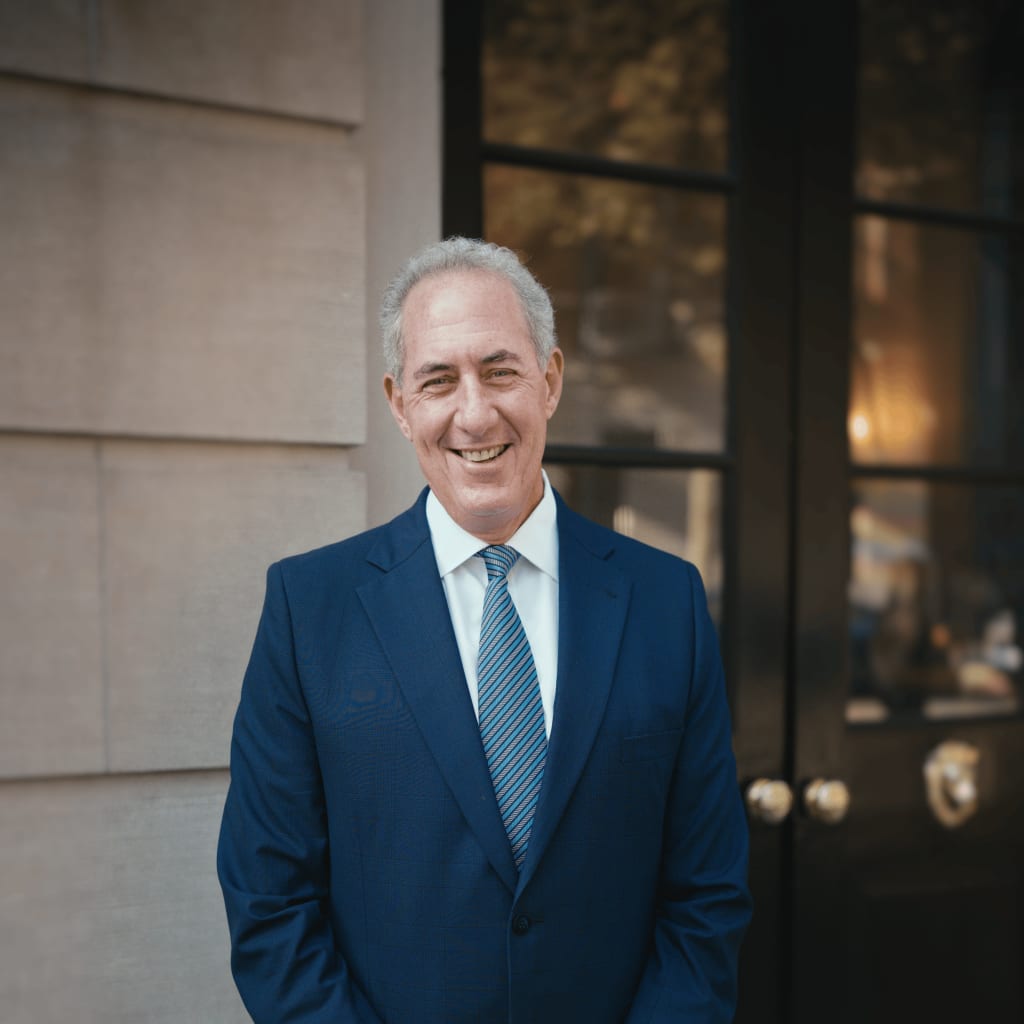 Michael FromanCFR ExpertPresident, Council on Foreign Relations (United States)
- Head of Special Projects, Institute for Security Studies (South Africa)
- President, Argentina Council for International Relations (Argentina)
Presider
- Chief Presenter, BBC News
Senior leadership from four foreign policy think tanks discuss the shifting global order, the strategic role of middle powers, and the future of diplomacy in an increasingly transactional world.
The Council of Councils is a CFR initiative connecting leading foreign policy institutes from around the world in a common conversation on issues of geopolitics and multilateral cooperation. The Council of Councils draws on the best thinking from around the world to find common ground on shared threats, build support for innovative ideas, and introduce remedies into the public debate and policymaking processes of member countries.
SOMASKANDA: It’s just after lunch, so I know that’s when the blood sugar drops but we’re going to keep this very entertaining and interesting. My name is Sumi Somaskanda. I’m chief anchor at BBC. I’m very pleased to be here.
Thank you to our wonderful panelists for joining us for this public session of the annual Council of Councils Conference. This is a CFR initiative that connects leadership on foreign policy issues and also talks about multilateral cooperation. So that’s a bit of what we’re going to get into today.
And the title of this session, which I think was up here a moment ago but to repeat it, “After the Rupture—The Reordering of the World.” And just before we came out here, I was told that we were going to answer that question for all of you: How do we reorder the world? So stay tuned. This is going to be very exciting. No pressure, fellow panelists. And just a reminder to all of you that this is on the record. So we’ll have an on-the-record discussion here. We’ll talk for about half an hour and then we’ll open up to your questions. So looking forward to hearing from all of you. Save the questions that you have, write them down, and keep them for our panelists.
I will introduce our panelists, just to say that, as you can imagine, and you know them, as you’ve been speaking to them all day, all morning, they have very impressive careers. I’m only going to give short titles, but you have their complete bios in the handout that you have with you there. To my immediate right is Francisco De Santibañes, the president of the Argentina Council for International Relations. Next to him is Ottilia Anna Maungazidze, head of special projects at the Institute for Security Studies in South Africa. Of course, Michael Froman—Mike Froman—who you all know, president of the Council on Foreign Relations. And at the end of the row here, Chaesung Chun, president of the East Asia Institute in South Korea.
So I’ll ask for a quick round of applause to get everyone going and welcome our panelists. (Applause.) I always think—I always think that helps to get us started. A round of applause is never a bad thing. I will start with just a quick, let’s say, lightning round question to get us all going. There is plenty to talk about, but what I wanted to ask you, first of all, what is the single biggest assumption about global cooperation that no longer holds? And what should replace it? OK, that’s my starting question. It’s a big one. I’m going to put you in the hot seat, Chaesung. And we have about a minute each, just to start. What do you think?
CHUN: Well, we are used to eighty years of the liberal international order led by United States, but there is a big debate about whether U.S. is declining. I don’t think it’s true. However, we are moving into some post-hegemonic era, meaning that United cannot perform as the sole provider of order producing international public goods. So we are entering into some different era where United States and allies should cooperate with each other to make a new type of international order.
SOMASKANDA: Short and sweet. Mike.
FROMAN: Well, look, I think perhaps the element of it that no longer holds true is that international cooperation, for its own sake, the processes of international cooperation, are to be valued above the substance. And that perhaps there’s a focus now on outcomes of international cooperation and cooperating where it makes sense to, and where it produces positive outcomes. And countries either are going it alone or going it in smaller groups, where it makes sense from that perspective to achieve outcomes that they can do together.
SOMASKANDA: OK. We’ll come back to those outcomes. That’s a good point. Ottilia.
MAUNGANIDZE: For me, perhaps the biggest flawed assumption is that we live in a world that is bipolar in nature, not only in who holds power but where they hold it. And, linked to that, perhaps a much bigger assumption is that might is right, and that power is wielded through military power alone. And we’re seeing—in response to the second part of your question—we’re seeing different ways in which power can manifest, different ways in which control can play out. And, as Mike said, that has resulted in new partnerships forming, some that previously may not have been imagined.
SOMASKANDA: A reordering of the world, the title of our talk. (Laughs.)
MAUNGANIDZE: Let’s call it that.
SOMASKANDA: Francisco.
Santibañes: Well, I think the idea that the best possible way to solve international problems is through multilateral institutions, organizations, that’s in crisis. Security councils, humanitarian organizations, most of these institutions are in crisis. And we have to be more flexible, probably, to find new mechanisms to solve problems. Of course, these institutions will still be present. But some way, like the G-20 or similar mechanisms where states can have regular meetings, build trust, reach agreements, and at the same time being able to preserve their autonomy. That, I think, is something that most countries now value a lot and not willing to give away that anymore.
SOMASKANDA: Chaesung, I wonder what you think of that point that Francisco made there, that some of those multilateral institutions, of course, have lost some of their potency, are no longer necessarily the forum where some of the global issues we’re discussing can be litigated. So, from your perspective, what does that flexibility, as Francisco called it, look like?
CHUN: Well, you know, multilateralism, or rules-based order, was created mainly by the global leader, which was United States, with the consent of the followers from 1945. Now we have crisis in multilateralism. I think we have to look back upon thirty years. There was a big structural change, because if you want to have an order in international relations—which is described as anarchy, because it’s composed of a sovereign nation-state—we should have some level of multilateralism or rules that maybe hegemonic states provide. But for the last thirty years, we have a—first time in our history a new phenomenon such as globalization, the climate change, you know, rise of the AI, you know, the rise of the rest, the voices from the third-world countries, all those things.
But interestingly, it overlapped with American unipolarity. And we thought that United States, as the most powerful country in our history, can solve all these problems. However, there was a problem from the demand side. There was a skyrocketing expansion of demands for international public goods. So even though United States is very powerful, as a sole country cannot solve all the problems. So now there are structural, you know, outcome of that thirty years. Very different type of international order, which led to some kind of hegemonic fatigue. Which had given so much burden on the United States as a sole leader. So now United States cannot lead the world based on the multilateralism that it, you know, created. They should find a new way, which can, you know, help solve United States, you know, in maintaining that global leadership.
SOMASKANDA: In a new way. Mike, what is that based on? Is there such thing as a values-based alliance now, do you think?
FROMAN: You know, I think the strongest alliances are likely to be where values and interests sort of come together. It’s not really one or the other, necessarily. You know, and I think if you think about the rules-based system that we’re just discussing, I think about it as most countries following most of the rules most of the time. It was never perfect, but on the whole you’ve had most doing most of the time. I think the challenge is over time that began to fray. And people felt like, OK, either they could violate the rules when they chose to, or they found other countries were violating the rules and weren’t really living up to them, and that created pushback on that. I think now—I don’t think the alternative to the rules-based order is anarchy, necessarily. I don’t think that’s in any of our interests. It’s not going back to some Hobbesian state of nature. I think what’s more likely to see happen is that there’ll be coalitions of the willing, coalitions of the ambitious, coming together around some combination of values and interests, and finding where they can agree to a set of rules that applies to them. And both rules and privileges of membership in that group. And if it’s open plurilateralism, then that means that other countries can join if they’re willing to sign on to those rules. And you may be able to start building up a different kind of a building block approach to a rules-based system, but one where there’s greater adherence and people see their interests as being more closely aligned with the rules than what we currently have.
SOMASKANDA: Sounds a lot like the message that the Canadian Prime Minister Mark Carney delivered in Europe earlier this year. So the perspective that Canada has at the moment, as well. Ottilia, I just want to get your take on the same questions I was asking, as I saw you nodding along as Mike was speaking.
MAUNGANIDZE: It was a partial nod. (Laughter.)
FROMAN: I was going to say, I’m not sure Ottilia and I agree on everything, by any means.
MAUNGANIDZE: We agree on most things, but it was a partial nod. And I think, so the first element for me is when we talk about, let’s frame it as the rules-based order, and when it started, I come from a continent where none of the countries could make those decisions at the time. They were under colonial rule and governance. Decisions made around who is the powerful country in the room and who represents those interests, for, let’s say, in southern Africa, you were looking at the United Kingdom and France, for the most part, representing those countries that were under the colonial realm. 1945 and 2026 are very different times. So when we talk about multilateralism as a vehicle through which so-called smaller countries can be able to engage on the global stage, it’s not just—it’s not just paying lip service to what that looks like, but it also means taking ownership of institutions that we didn’t design, but institutions, in many regards, that we have also stood to benefit from.
If you look at the moment at the court’s role for the International Court of Justice, and you look at the variety of issues—from borders to disputes around conflict to how to handle maritime issues—you see countries like the Maldives, one of the smallest geographically but also economically, putting forward one of the strongest arguments on climate. Arguments, perhaps, that you would presuppose that bigger, more powerful countries could have made a long time ago. You see countries like Barbados making similar arguments and being able to push forward resolutions and processes that perhaps fifty, sixty, certainly seventy years ago not only could they not make those arguments, they weren’t in the room to make them.
So just because we didn’t build the house, so to speak, let’s call it the United Nations, let’s call it the G-20, doesn’t mean we can’t be part of the process and be invested in the outcomes. And for Africa—charity, for me, always begins at home—for Africa what that looks like, it looks at re-evaluating partnerships. Some that have worked, some that have partially worked, and thinking about what’s in it for me. So is it values? Is it principles? What undergirds that system depends on each individual country and how they look at it. How we understand human rights, how we understand equality has been guided by history, but is very much a feature of the way in which we engage in global debates.
If I can end maybe with just one minor reflection on what the world looks like at the moment, from the African perspective. In 2002, there were twelve diplomatic missions from Türkiye on the African continent. Today there’s forty-four, in forty-four African countries. While the U.S., while China are debating each other on certain issues, there are countries making inroads on the continent. If they are not also in the room, the discussions that will be had will only be partial.
Santibañes: Yes. From a Latin American perspective, the previous order was a good one. It was the liberal order based in promotion of liberal democracy, globalization, international institutions. At least in the last decades, Latin America has been a very peaceful region in the world, lack of conflicts. Between countries, of course. Within the territories, a lot of violence. And multilateralism was very positive for us, as small, medium-sized countries, gave us a voice in international organizations where some of the decisions that will were going to affect us were taken. And now things are changing. I think we were better off with the previous order.
So, what we are seeing in Latin America now is basically, especially the southern countries, a competition between the U.S. and China, strategic competition. That makes much more difficult cooperation between our countries. And the weakness of multilateral organizations is sometimes taking away the possibility of expressing our views or being part of the process where decisions are taken. So I think we are moving to a different order. Probably we are already in a different order that we’re trying to understand. But there are some key elements of the previous order that are very important. And we have to preserve some old elements of that.
SOMASKANDA: I’ll just follow up on that and ask you, in Latin America, in that perspective, does that mean more regional cooperation? Does that mean reaching out to specific targeted partners? How does that reordering look like for multilateralism for Latin America?
Santibañes: Well, it’s very difficult. We have many different integration mechanisms. No one is—I think all are in crisis. So we are seeing a crisis of liberal democracy, as we know, in many countries. We are seeing countries are starting to side with China, or BRICS, other countries who are closer to the U.S. And that makes very difficult the dialogue and the cooperation between governments in Latin America, because they have diametrically different positions. In foreign policy, and there is a tendency—maybe explained by the new world order or not, of thinking short term. It’s very difficult for governments to have long-term policies to preserve the principles of foreign policy in different governments. So we are in a bad shape, in that sense.
We can discuss this later, but on the other hand, conflicts like the ones are taking place in Iran favors the economies of Argentina or Brazil, because there is more demand for critical minerals, for energy, because of food security. Countries are even willing to—willing to pay a premium for products because it’s a way to diversify partners. So it’s a mixed picture. But my message would be, what was good of the previous order we should try to preserve it as much as we can.
SOMASKANDA: I want to stitch these thoughts together a bit. In this reordering of middle and smaller countries, looking to new partnerships and alliances. Chaesung, in a time where, as Ottilia said, we have this might makes right perspective of great powers, what are some institutional fixes that can perhaps restore some credibility to some of those multilateral organizations, or at least some sort of global cooperation?
CHUN: Well, I think that’s where the role of middle powers come in. You know, South Korea, as a middle power, try to enhance international cooperation, because, you know, South Korea, for example, has developed under the fabric of so-called rules-based order. And middle powers, some European countries and some Asian countries, including Northeast and Southeast Asian countries, has benefited from working of this liberal, predictable, orderly international settings. So it’s not because middle powers are norm-observing or altruistic. We try to observe the norms because it’s beneficial to our own interests. If the international order is guided by might-based mechanism, great-power rivalry, then there is no room for middle powers, even though we belong to, you know, number ten rank in international politics. But still, the whole order will be dominated by great power rivalry, which is really cruel international setting for middle powers like South Korea.
However, there are also the problems for middle power, you know, coalition or activities, because there is a limit that middle powers can do if there is a zero-sum type of game between U.S. and China. For example, South Korea is sandwiched between U.S. and China. If there is a big push from the United States, you should not export, for example, semiconductor to China, that’s a big problem. And also, we depend upon Chinese market for our national interests. Another problem is a collective action problem, because the interests of diverse middle powers are not identical, so how to make a collective action also raises another problem for middle powers.
SOMASKANDA: Yeah. The European Union knows that very well. Trying to get twenty-seven countries to do anything is obviously quite difficult. But, Mike, I’ll ask you that as well. From the perspective of the U.S., and someone who was the USTR, of course. I mean, how do you see middle powers perhaps leveraging some of the power that they have together, especially in this kind of zero-sum, great power world that we’re in?
FROMAN: Yeah. Look, I think middle powers have a very important role to play, potentially they have played, and will continue to play. And I think in a number of respects, middle powers, and even smaller powers—I think of countries like Singapore—can punch way above their weight, intellectually and what they contribute to the ideas that help shape the international system.
Having said that, I think there’s a limit, as you said, that can—that they will—a ceiling that they will hit. If you don’t have the major powers involved—you’re not going to have global security that’s established by middle powers. If you have U.S., and China, Russia, others, significant powers, outside of that. Even in the trading system, if you have the two largest economies of the world, United States and China, each playing by their own set of rules—which is how I’d sort of define where we are right now. I think China has been playing by its own set of rules for two decades. I think the U.S. has started playing by its own set of rules more recently. It’s hard to have middle powers to find a new rules-based system without 50 percent of the global economy at the table or participating in that regard.
So they can define in that, sort of, open, plurilateral way relations among themselves. I think they can advance discussions intellectually and punch well above their weight in that regard. But ultimately, they’ve got to find ways of convincing the major powers that their interests are aligned on some set of issues or another, whether it’s cooperating on critical minerals, or cooperating on secure supply chains, or cooperating on dealing with the latest pandemic, of which there seem to be a couple popping up in the news in the last few days, that there’s something that is to be done there that it’s in their interest that the middle powers can help pave the way for.
SOMASKANDA: Just to follow up on that, Mike. And, you know, crystal ball for you as a former USTR. What would that look like with some of the international mechanisms we have? Reforming the WTO, is that, you know, even a possibility with the system you described?
FROMAN: Yeah. Look, I think it’s kind of the tail wagging the dog. A lot of people focus on the institutions and, you know, how do we reform the WTO. We’ll reform the WTO when there’s a consensus among the major economies as to what we want out of the global trading system. And right now we’re not even having that conversation, right? We’re not having that conversation with China, with other—with the major emerging economies about what should the international trading system look like, and what should be the principles, what we’ve had since the Second World War, which of those do we want to preserve? Which ones need to be changed? How do we think about the evolving global economy? It’s a very different economy than it was eighty years ago. And until we can have some degree of consensus around that among the major powers, institutional reform doesn’t really happen. It doesn’t really make sense.
SOMASKANDA: Ottilia, just a moment ago when we were in the back Mike was saying that there is a sort of support group for think tanks here in D.C., which is really good to know. We also—journalists, we also have something of a support group here in Washington. But I wonder, in these quite difficult times, what diplomacy looks like. I imagine diplomacy is a very difficult feat right now, one that is closely aligned with this reordering that we’re talking about. So how do you engage in diplomacy in such fraught times?
MAUNGANIDZE: Perhaps, if I think about the one space where there is quite a bit of winning, it is in the fact that dialogue is happening in spite of the many tensions. Who would have imagined that last week President Trump and President Xi would be sitting opposite each other, not necessarily on the same page on everything, but finding moments or spaces for alignment. That is peak diplomacy. But the diplomacy across the board for all countries looks like—at the moment, it looks like recognizing that there is sort of your hard power conversations that continue to happen. There is your soft power level of engagements. But diplomacy occupies the smart power space, the need to ensure that your teams that are negotiating on your behalf or that are debating any particular issue are now a lot more varied than they used to be.
So, yes, you can have, as previous conversations were, on trade—before, you would have almost exclusively trade experts in the room, maybe a few economists here and there. But the world right now, in all of its complexity, lends itself to making sure that you have a nice and solid package of brains in the room. Not all of those are going to come from government. The way people think about diplomacy is they think singularly on a state-state diplomacy level. But increasingly we’re seeing the role that different actors, whether it’s from the civil society space, whether it’s the private sector, actually pushing on a number of issues that directly impact them.
What makes any head of state start to backtrack, for example, on trade? It’s people, bothered by the impact of tariffs on their day-to-day and their cost of living. How you’re able to get that into a room where ordinarily it is the elites negotiating that conversation, it is—as we are increasingly seeing—the platforming of different views. This week, and last week as well, the U.N. Office for the Special Advisor for Africa has been convening an Africa Dialogue Series that would probably go ahead just fine if all you had were politicians involved in the process. But interestingly, you’ve seen the role of intergovernmental organizations in there, non-governmental organizations as part of the mix, business. The politicians as well but, importantly, in each discussion you see a feature that, for me, is a welcome one, which is you see more women, you see more young people being at the forefront, raising issues, and doing so in a way that actually facilitates, hopefully, the kinds of solutions that we need.
So diplomacy has to change, and it is already changing. What we know is if we—if you kind of wait for the system to fix itself, when we know that the system is built by people, some of them frustrated by that same system. So in many ways, like I say, diplomacy is changing. It’s shifting. It looks a lot different than it did twenty, thirty years ago, because different actors, some in suits some not, are now in the room.
SOMASKANDA: Francisco, is that change coming to Latin America, would you say? Argentina, as well?
Santibañes: Yes. I think so. I think in our diplomacy today, more deeper, with more diversity. But still it’s very important the role of the diplomatic corps, I think. Throughout the Western world, they are in crisis, on the defensive. And they play a fundamental role in terms of professionalism, long-term vision, knowledge about how to interact with our governments. And I will add also think tanks, no? We’re coming from a couple of days of meetings of the Council of Councils, think tanks from different countries in the world. And today, I think, think tanks can help for countries to have a long-term vision to create consensus about the strategy.
SOMASKANDA: We should all clap for that. Thank tanks can help, yes. (Applause.)
Santibañes: Strategies, and bring the lead there, and in discussions, change of ideas. And also informs, like here, the meetings we have in D.C., where even if governments don’t talk with each other, as happened in Latin America, we have a lot of divisions. Think tanks together and we build bridges that may be very helpful in the future.
SOMASKANDA: I’ll put that same question to you, Chaesung, to get the perspective of diplomacy now in South Korea and Asia among middle powers.
CHUN: Well, yes. You know, diplomacy is thought to be the activity to maximize your national interests. But I have a different thought. You know, we are entering into the period where our technology can destroy our species. You know, we talked about AI regulation yesterday, climate change, and all those things. So diplomacy is not just about, you know, coordinating our national interest. We are confronting the era which is order versus disorder. Diplomacy should be that activity by which countries should try to find out the new way of our own survival, and try to have a new global order. We have globalization without local governance. We have nation-state system only in times of globalization.
And, for example, we are developing generative AI, from 2022. It overlaps with the period with U.S.-China rivalry. So we deal with this, you know, tremendously potential technology from the perspective of hegemonic rivalry, rather than regulation from, you know, a universal perspective. So we don’t know what kind of, you know, this sovereignty trap will lead to. So diplomacy is not just about national interest anymore, especially diplomacy among the, you know, two great powers, U.S. and China. So that should be the activity by which we have to think about the whole future of the international order and try to find out a way of having a new international order.
SOMASKANDA: I’ll just say, we have about fifteen minutes or so before we get to some questions, but I want to go through, zoom in a bit on some of those closer policy issues. And you brought up AI. And I understand you were all talking about this yesterday, but maybe we can delve in again. Because we’re talking about a rupturing world order where you have maybe, as you said, Mike, interests and values aligned. And when they don’t align, it’s difficult to come to consensus. So on an issue like AI, and looking at what type of regulation, you have a patchwork across the world right now. The EU is in one place, China another, the U.S. another. How do you begin then to start to reach some sort of international consensus on how to engage with this type of technology?
FROMAN: Well, I think it’s incredibly—it’s incredibly difficult, in part because it’s not fundamentally in the control or being driven by governments, right? This is different than so many other issues that we faced in the past, in that the innovation is all coming from the private sector. It’s coming largely from the U.S. and, in a different respect, China. We’re sort of in a race, but we’re sort of—we’re racing in different ways. The U.S. towards superintelligence and the advanced LLMs, advanced artificial general intelligence. China appears to be focused a bit more on how to deploy it, and how to deploy it in the real economy, physical AI and the rest. But each of us probably would be doing things somewhat differently if it weren’t—as Chaesung said—if we weren’t in a rivalry. We would probably be taking a step and thinking about the technology differently, and perhaps taking a breath.
But the reality is, we are in a rivalry. And we are in a race. And I think we—I don’t think it’s the difference between national interests and global governance. I think we have to—I think everything ultimately gets driven by national interests. It depends on how you define your national interests. Are you defining it in a narrow sense or in a broad sense? And, you know, I’ve often said, as far as I can tell, every American president has put America first, right? It’s just that they define how to go about that perhaps in different ways. No American president came in saying, I think we should be number two or three, right? It’s always America’s interest first. And then the question is, have we defined it as building up a rules-based system in various institutions over the years? Do we define it by going alone? Do we define it by going with a small number of like-minded partners, or those who share values, or those who share interests, or, ideally, those who share both? I think that’s the real question for us going forward.
But when it comes to this technology, I don’t think the prospects of global governance are very strong. In part, because I don’t think, even on the national level, we’re having great difficulty with governments and legislatures keeping up with the pace of change, understanding the technology, let alone understanding what the regulations ought to be around it, while continuing to preserve the potential for innovation and the incredible upside that may come as well from allowing innovation to proceed. So that’s what we’re struggling with here. It creates a very different role for the private sector than they’ve ever had before. And I think trying to figure out the relationship between the private sector in one country to another, and between the private sector and government, is one of the biggest challenges we currently face.
SOMASKANDA: What do you think, Ottilia?
MAUNGANIDZE: So, Mike has said pretty much all of it, but I think this idea that we—
FROMAN: That means I talked too long. (Laughter.)
MAUNGANIDZE: No! Very brief. But this idea that we are constantly playing catch up to the way in which tech is evolving is one that, in my mind, and I say this as a lawyer, one where we actively do need to actually have some kind—even if it’s fragmented—regulation, for sure. But the other point that I wanted to make, almost as a footnote to what Mike said, in his response he focused on the U.S. and China. And I think we have to constantly be checking our blind spots. The idea that even in the AI race that there’s—it’s a two horse race, so to speak, makes us lose sight of the fact that there’s a lot, particularly in the biomedical space, developments using AI, for example, out of the UAE, out of Qatar.
That if you’re paying attention only to two actors, by the time you are regulating, focusing only on what they are working on—whether it’s mechanization, or processes, or whether it’s artificial general intelligence—you are going to miss a huge segment. So, again, you’re constantly going to be playing catch up. It requires recognizing that while they may not be the current biggest players, that they’re also learning from the various technologies that are being developed. And so it does mean bringing on board as many actors into the room as possible to discuss what is the current technology that is being developed.
Quite frankly, as I sit here I can tell you for free that there’s a lot that I just do not know around what is being developed and where it’s being developed. What I do know is that there are countries that are making technological advancements that we’re not paying attention to, because we’ve defined the race as a two-horse race when, in fact, it’s a lot more global than that.
SOMASKANDA: Hmm. That’s fascinating. What do you think, Francisco?
Santibañes: Well, first of all, one characteristic of the current world order is uncertainty. And a lot of that has to do with artificial intelligence technology, because we don’t know the developments that are coming. And we don’t know how they affect international relations. But we are seeing that now in the conflict in Iran, how artificial intelligence can be used. So that creates a lot of uncertainty. And that’s very bad international relations. And I agree with Mike, this is even more complex, because you have the companies, that previously a conversation between governments and the private sector to reach an agreement. And by far the most advanced countries in these are the U.S. and China. They have to reach an agreement. But as was mentioned, there are other players that should be considered. But this fundamental part of the new order is technology. That’s, I think, probably a difference with the previous one.
SOMASKANDA: Does the governance of that technology being discussed in a way in Latin America, do you think, that’s not being perceived here in the U.S. or in the international fora?
Santibañes: Actually, I think we lack discussions about the subject.
SOMASKANDA: Mmm hmm, OK.
Santibañes: So the danger of not having our own strategy, developing our own capacities, is that eventually we get closer and closer to one of the world powers. I don’t know, in space issues Brazil worked closely with Chinese, Argentina worked closely with the U.S., but that’s also dangerous because you have two world powers that cannot go to a conflict because of nuclear weapons. And the nightmare for us will be to solve the dispute of foreign powers in our own region. So we need more collaboration and a common strategy in issues like technology.
SOMASKANDA: We’re just going to get to you in just one moment. We’re almost about to open up the questions. I think we have a few minutes. If I can ask one last issue-based question to all of you, and then I promise we’ll come right to your question. I’m curious to ask you all about climate change. This is another one of those extremely thorny international questions, where you have countries moving in different directions. You had Colombia, for example, hosting a conference born in part out of the frustration with the U.N. climate conference and its inability to include certain language in their closing statements. And a look from some middle powers to move forward on more climate-forward and green technology perspectives. So I’ll ask all of you, starting with you, Chaesung, how do you begin to bring an international consensus around what to do on climate change in this current order?
CHUN: Well, there is already a consensus from the early 1990s that there is a scientific reason for, you know, the climate change and all these environmental degradation. But the problem is there was a, you know, COP decision that we have to regulate our levels of the—you know, all those green gas effect, and all those things. But the problem is if there is a war and national security matters, if there is, you know, skyrocketing oil price, and we have to, you know, go back to the coal as our basis for economic development, and so on. So even though there is a strong consensus about, you know, regulating climate change, but if there is something happening which is directly related to economic development, then, you know, the older consensus can be weakened. And we have a problem. So those each are all, you know, interconnected—how to regulate the political problems that will lead to the question of how can we continue this regulation of climate change.
SOMASKANDA: Mike.
FROMAN: Look, I think there’s an absence of consensus about global regulation, to state the obvious. And so given the importance of the issue, I think we need to be quite pragmatic and focus on what can be done to actually bend the curve. And that, in my view, comes down to technology and innovation in the energy space, and finance. And if we can unleash new technologies, backed with finance, to really bend the curve of emissions and the trajectory that countries are on, and focus on that versus big conferences where communiques are drafted and everyone goes back to their capitals and ignores them, I think we’ll be in better shape. And, frankly, time is not on our side, and so the sooner that we can really focus on energy technology, emerging energy technologies, and the kind of financial engineering and financial tools that could be used to make sure those energy technologies get deployed at scale around the world, and deal with some of the technological issues that are out there that might be able to help on this.
I would even hasten to use the word, what’s it called, geo—the using the—seeding the clouds and—geoengineering. Thank you. Even opening up the conversation about geoengineering, which is not a popular conversation to have, right? But, you know, once upon a time adaptation was not a popular conversation to have, because adaptation was viewed as giving up on mitigation. And now we’re talking about adaptation. We need to talk about emerging technologies, finance, and even potentially geoengineering to have pragmatic steps towards resolving the issue. Thank you. (Laughter.)
MAUNGANIDZE: For the top tip. I come from a continent most gravely impacted by climate change. Perhaps not at the same existential level as a lot of Pacific islands, for example. But I also come from a continent where, when Mike talks about energy technologies, it is near impossible to have those without the critical minerals that are currently being mined out of the Democratic Republic of the Congo, the recent and continued discovery of lithium out of Zimbabwe. The ownership of those resources and how they are distributed is the current conversation, and what that looks like. Previously, Africa attended all the UNFCCC meetings without having had the discussion necessarily at home.
Over the past three years, through the Africa Climate Week and discourse at AU level, those conversations have been happening. That came out of frustration, having had previous COPs, including that in Durban, in which it was very clear what needs to happen and when it needs to happen, and then realizing if we go into the room as individual countries on this issue, when we do represent fifty-four member states of the U.N., then perhaps we’ve been doing it wrong. So the conversations have now been happening at continental level. What are Africa’s key climate priorities? And what are the ways out of it?
Mike referenced financing, for example. The need—even the negotiations on climate credits, which previously was singularly on a bilateral basis. Increasingly you see countries pushing back if the terms don’t necessarily work for them, and they don’t work for their region. So it’s a different way of thinking about the systems and structures that already exist. But I hope—and this is my hope more than anything else—I hope at the back of our leaders’ heads is what I opened, with the critical minerals needed for the energy technologies, the future of how we even exist on this continent—in this world—(laughter)—are from my continent.
Santibañes: I would add briefly, civil society plays a role, creating incentive for governments to push the agenda. And what was mentioned, created incentive for a private sector to develop technology that make it economically viable, and to transfer that technology also to developing countries. Find a way, it is very important for Africa, for Latin America, to be part of that revolution.
SOMASKANDA: And scale it up. Well, I know we have a few questions here. Jane has a question. We have two here in the front row. So if we can move down the front row with the questions. There’s a microphone coming around. I think Jane’s just going to be—then we’ll come right to you. My apologies.
Q: Oh, I don’t—I’m happy to defer.
SOMASKANDA: No, go ahead. We’ll start here, and then we’ll move down the row.
Q: OK. So Jane Harman, recovering politician. What a brilliant panel, which happens to have been moderated by a woman. Just observation.
Two things. One, maybe there’s a new term for the multipolar world which is emerging, and maybe it’s the multiparticipant world, because it’s not just governments that are going to shape the decisions for the future. My question is, there’s a problem going on, in case anyone missed it, in the Strait of Hormuz. Do you think that could be an opportunity for a coalition of the willing, whatever that is, to emerge, countries—certainly NATO has offered, a number of Gulf countries have offered, and others have offered—to come together perhaps to structure the way an international waterway will be, whatever, kept safe and open for the future?
SOMASKANDA: That’s a great question. Who would like to take that on? Sure, Mike.
FROMAN: Great question, Jane, as always. Look, I think this is a great example because it’s where the rules-based multilateral system of the postwar period, you know, meets the current reality. One of the most fundamental principles of the rules-based system was freedom of navigation, that nobody should stand in the way of ships going through straits, nobody should put its toll on them. And so now we have a rule. And it’s being violated. And the question is, what—do we change the rule? Do we enforce the rule? Do we rebuild consensus around the rule? Can we get Iran to sign on to the rule going forward, or not? And what does that mean for other straits as well, where other countries are now saying, gee, this seems like a pretty good source of income for us, potentially, to charge a toll on the straits that we oversee.
So I think it’s a great opportunity for there to be a coalition of the willing, coalition of the ambitious, to come together. Hopefully, it’s diverse and it includes the folks who are benefiting most from the trade that’s coming out of the Gulf, which are in Asia, China chief among them, that recommit to the rule of freedom of navigation, wherever that may be. Whether it’s the Strait of Hormuz today or the Strait of Malacca tomorrow or the South China Sea the day after. And are willing to put force behind it to ensure that it happens.
SOMASKANDA: Questions here and here, I believe.
Q: Yes. This is David Aaron.
I’m struck by the fact that in all this conversation of restructuring, or rebalancing, or reorganizing international relations, there’s been not one comment about Europe. Is it irrelevant now? Or what’s the situation here?
SOMASKANDA: Does anyone want to take that on?
FROMAN: We have our colleague—our colleague from Brussels is there behind you, who’s been making much of the same comment over the last couple days, actually.
MAUNGANIDZE: And, I mean, your point over the past two days, Carl, is perhaps most poignant now. For the African continent, and obviously we’ve been trying as best as we can to cover so many issues in the time that we have, Europe is our immediate neighbor to the north. It’s also the continent with which we have the longest history. Yes, we do have a geographic connection to Asia, but for the most part if you—if you go country-by-country our balance of trade, at the moment, for example, for a lot of countries, it’s China, the EU, individual European countries. So, there’s partnerships. When we talk about a reconfiguring of partnerships, there’s partnerships for the African continent that almost seem non-negotiable in the way in which they play out. It means that that is why you will see Emmanuel Macron spend a week in Kenya, running with Eliud Kipchoge, on stage talking about our common histories, however violent those histories were, and our common futures. Because that is a nonnegotiable for Africa.
That being said, I do think—and I go back to what I said earlier specific on AI—which is, this can be our current and our future blind spot if we think about the global contest as only being a contest between the U.S. on its own—so not the U.S. as part of the West, but the U.S. on its own—and China. One of the, perhaps, relationships that the rest of us look at and think, this was going so well what happened, is the transatlantic partnership. So that goes beyond the North Atlantic Treaty Organization. It goes into the historical and other relationship between North America, in particular, and Europe. And as a visitor, let me say, that is for you to fix. (Laughter.)
SOMASKANDA: Francisco, you wanted to?
Santibañes: Yes. From a Latin American perspective, Europe, I would say, has been absent politically and economically. Everything is about China and the U.S. Of course, we have cultural, historical links. Europe has been the main investor in Latin America for many decades. But it has been absent. Now there is some hope. After almost thirty years Mercosur countries and the European Union signed a free trade agreement, strategic agreement. The conflict in Iran, I think, is creating strong incentives for Europeans to diversify. And they’re really interested in minerals, food, and energy from South America. But the truth is, I think Europe has lost ground. If you see technology that we were discussing, it’s very difficult to find a big technological European company today. From Africa perspective, Latin American perspective, I’m sure Asian-Pacific, you see that. And so I think there is some hope. For us could be very important as a way also to diversify—don’t have to choose between the U.S. or China but to have new players, like the European Union. But that has been the reality in the last fifteen, twenty years.
FROMAN: Look, I think it’s in the United States’ interests, and I think it’s in the world’s interest, that Europe be strong, prosperous, innovative, and capable, and I think on all those fronts, it has challenges. And we all have challenges, of course, in our own countries, in our own continents. And but Europe knows what it needs to do. You know, how many more reports do we need from Mario Draghi, or from Letta, or others about the reforms that Europe needs to go through to become more innovative, to get on a higher path towards growth. We’re now seeing them put more significant resources towards national security, towards defense.
The question will be, do they spend it on the right things? And do they take the necessary actions—some of which are very difficult because they cut across national prerogatives of consolidating defense industries. Not every country needs its own tank. Not every country needs its own air defense system. Will they get their act together and use this quasi-crisis caused, on one hand, by Putin to the east, and perhaps by President Trump on the west, to get their act together and to get on a higher trajectory of growth, innovation, and capability? I think it’s very much in its own interest. It’s certainly in our interest. And I think it’s in the world’s interest.
SOMASKANDA: Question right here.
Q: My question to our guests from South Africa. My name is Odeh Aburdene. I’m with the Capital Trust Group.
In the ’60s and ’70s you had a Non-Aligned Movement that was made up of India, Indonesia, many African countries. Is there a role for a new Non-Aligned Movement?
MAUNGANIDZE: Short answer is, yes. The short answer is, yes. I think for a lot of countries—earlier when Francisco was talking, I actually wanted to kind of chime in and say, why do we have to choose, in the bigger scheme of things, right, being put in between two powers that speak to each other, whose tech feeds off each other in many different ways? Politically, the space for non-alignment on certain issues has narrowed. On other issues, you find countries—South Africa is one of them, India, likewise—that maintain that they do not pick necessarily a side. But they don’t do so within a vehicle of a Non-Aligned Movement vehicle. I think in 2026 what we are seeing, part of the conversation that we’ve had, is different clusters of strategic alignment. Some of those are on issues. Some of those are principles based. But that seems to be more of the future than a reimagining of a Non-Aligned Movement, as it was then for a very particular purpose and a particular moment in history. It’s going to look different, because the issues are different.
SOMASKANDA: This gentleman here had his hand up just a moment ago. Then we’ll come back that way.
Q: Hi. Thanks. Just adding my thanks to the panel, which is excellent. I’m Tim Persons, an AI partner at PWC.
Not an AI question, though. I wanted to ask about finances. (Laughter.) Really, just the global financial system. When you think about the emerging new world order, what does the new global financial system look like? In terms of those things, we have here in the States the GENIUS Act being implemented. So stablecoins, things like that. I’m just interested in the finance piece, which you all think. Thank you.
SOMASKANDA: That’s for you.
FROMAN: By default. (Laughter.) Look, I think it’s an interesting question about how much the global financial system that’s been in place over the last eighty years, with the dollar at the center, is going to change over time. You see rebalancing at the margins, some bilateral trade being denominated in non-dollar currencies. But the dollar is still fundamentally the store of value for most of trade. And it’s a reflection of our regulation, our deep capital markets, the fact that this full faith and credit of the U.S. government behind the market, et cetera. And it’s not that we don’t have our challenges. We have a lot of challenges facing the dollar, including our own fiscal situation which most economists view as unsustainable. But it’s that we’re the prettiest house on an ugly block. And there isn’t a real good alternative to the dollar right now to play that currency.
If Europe, again, became more unified in its capital markets, had broader and deeper capital markets, and a budgetary union as well as a currency union, then you might have an alternative with the euro. If China moved towards real internationalization of the RMB, but that would mean lifting capital controls, you might have a greater role for the RMB. In the meantime, I think the dollar and the current financial system is likely to continue to prevail. And these innovations, like stablecoins and things, I think, may contribute there at the margin. Some of them will reinforce the dollar, others, you know, may be an alternative to it. But I think fundamentally markets have a way of demonstrating where they have faith. And they put that faith right now in the U.S. dollar.
SOMASKANDA: I’m just going to work around here. There’s a few questions. So I’m going to start with this gentleman here with the glasses, and then come that way.
Q: Hi. Hello, I’m a corporate member at CFR.
I have a couple questions. The first is, you talked a lot about the role of different states in this re-emerging or reorganizing world order. If you can talk a little bit about the role of nonstate actors, whether they be companies—you touched a bit on that, Mike—or other—militias, or other just nonstate actors, and how they’ll really shape the order. And the second question is, as post-1945, post-U.N., the assumption of liberal democracy has always come with a certain assumption about what democratic citizenship looks like. As that changes at that structural level, what can we—what type of citizenship do we think will be exported? What hopes are there for democratic reforms at the citizen level beyond the IR discussion we’re having? Thank you.
SOMASKANDA: Who wants that?
MAUNGANIDZE: Look, on the nonstate, both—not both. Myself, Mike, and Francisco spoke to some of that already. We are seeing the space for the private sector on key issues—AI was just one of the examples that was used. On tech, and the mining sector, and so forth they play a critical role—sometimes constructive, sometimes destructive. If you look at the conflict, for example, in the Democratic Republic of the Congo, or in Sudan, but for nonstate actors perhaps the situation would be—would be different. But it’s not just the private sector, right? It is the civil society space, which perhaps touches on your question on what democratic citizenship could look like, or currently looks like. It also means clusters of people, not necessarily organized in a corporation or an organization.
We’re seeing a lot more movements on issues at the moment than previously were there. So they don’t do so under a particular vehicle that they are this particular civil society grouping, but they do so on issues. Climate has been one of the most vivid of those, but they are a whole range of other issues, which perhaps answers your second question as well. Which is people take up or occupy space based on how they see whether their democratic voice is heard, or not. If we go back to the simple definition of democracy, it ought to be a rule of the people, by the people, for the people. And what that looks like for different communities has been a reinforcement of the system in place, or a protest against that system if it doesn’t represent their interests.
Santibañes: Probably just a comment, not about democratic citizenship but the principle of democracy, international relations. We should not forget the role of the United Nations. We’re now choosing a new secretary-general, supposedly will come from Latin America. And the General Assembly has principle where every country has a voice, has a vote. I think it’s important. And of course, a lot of discussion about the Security Council, possible reforms. But the United Nations still plays an important role. And a lot has to do with democracy.
SOMASKANDA: We’ve got several questions. There’s one question back here, and then we’re going to come to the woman in the glasses here, and then come to this side of the room. So, I promise I’ll get to everyone.
Q: Thank you so much. I’m Kent Packard, president of Women Forward International.
And my question is, so much of what we’re discussing today seems to have to do with how we define—how nations define their national interests. Is it going to be entirely selfish or is it going to be, if we do well and others do well—if we think about the wellbeing of others, we will also—everyone will advance? And it has to do with maturity, humanity’s maturity, and character. And I’m wondering what you think about the role of education in character development. Can we transform ourselves in this fundamental way so that when we have this type of discussion about the reordering of the world, that is a factor? Thank you.
SOMASKANDA: Creating good citizenship through education.
Santibañes: I would say just one thing, is we tend to forget the lessons of history. That has a lot to do with education. Future leaders and the population in general, but the lesson of the Second World War, for instance. So I think education, in that sense, play a big role. Now with social network, artificial intelligence, what we are seeing about the abilities of reading dropping dramatically from Western countries. So, I think it’s important point.
SOMASKANDA: Go ahead, Chaesung.
CHUN: Yes, that’s, I think, a very important question. You know, the Harvard economist Dani Rodrik once said that there is a trilemma. We cannot have globalization and national sovereignty and popular democracy at the same time. So we are living in the period of nationalism, I guess, because we failed to create a right global governance, and the fact of globalization. So we select, you know, populist leaders everywhere. Democratic backsliding everywhere. So even though there are different democracies, we are having that backsliding phenomena at the same time, that there should be some common cause globally. Because, you know, global phenomenon are penetrating into every nation-state. And then national sovereignty cannot regulate and save the people. So I think it will persist for the time being. So it will be very hard to enhance global citizenship or global democracy for the time being.
So we have to work to have a more enlightened national interest. If there is a clash of national interests forever, then, as I said, there will be a catastrophe for all the, you know, human race. But we are living in the global society. If there is something happening at one corner of the globe, then another corner will be, you know, directly impacted. So I think we are learning how to live in the globalized world. U.S.-China rivalry, for example, I think it’s something like one great political party, U.S. and China, which don’t have a majority yet. So there are some small countries who are participating in that global democratic political space. So by having different ideas about the whole global political situation, we can educate our next generation that we have to think about the globe as one unit, try to evade all the so-called hegemonic war, diseases, trap, all those things.
SOMASKANDA: Right here on the third row, and then we’ll come back there.
Q: Greetings. Barbara Matthews, longtime Council member. I run a small data company, but I rise in my capacity as a Council member to thank both the membership as well as the panel for a really rich discussion.
Hard to choose just one question, but I will try. It strikes me that the first great age of globalization gave us freedom of navigation, which served an agreed mutual interest in economic development. The second great age, after World War II, same story, economic development. And it strikes me in this entire discussion I haven’t heard a lot of optimism about what the current age brings us. (Laughter.) I’d like to suggest I see the beginnings of it, actually, in the critical mineral space. The nations rich in resources now have a seat at the bargaining table. South Africa is probably the most eloquent in talking about rising up the value chain, but they’re not the only ones. India does a great job of that as well. The United States has the Pax Silica. There is a new consensus building around diversification away from the hegemon that has not been willing to follow the rules established almost a hundred years ago. I’d love to hear the panel say something positive about the forward trajectory of cross-border coordination, communication, engagement. I don’t personally think the national interest is a bad thing, but alignment of interests is mutually beneficial. Where do you see it going?
MAUNGANIDZE: We’ll work on our tone. (Laughter.) Because at least, and I speak only for myself here, but when I speak about the various actors being able to be involved in conversations that were previously excluding them, that is a positive development, right? What comes of that, and the processes that follow is something, again, that enables us also to hold them accountable. And so, yes, we can look at it from a—from the tensions that it creates, but we also have to recognize some of the conversation that we are having even here, in the way that we are having it. Firstly, in 1945, I wouldn’t be here. Firstly, right? But the ability for us to have these kinds of exchanges, to have a constructive conversation about things that bother us, and be able to chart where we can some solutions—even if they seem half-baked, even if they seem incomplete—that is the moment that being in an era of information has provided us.
So, when we talked about AI, the conversation focused on a competition component. But for a lot of people AI has simplified their lives in ways that they don’t even know it has done so, because there are tools that they don’t realize are artificial intelligence because they’re so normative in their life. And so there are glimmers of hope. It’s different. I’ll summarize—different actors being part of the conversation, drawing and leveraging the opportunities that technology, and, of course, the critical role minerals can play for the development not only of those that extract them, but also the spaces in which they are extracted.
Santibañes: I would say, to follow in the same line, technology is helping a lot from a developing country’s perspective, in terms of communications. Now translations are automatic, so it’s much easier for us to share knowledge. And it’s much easier for marginal population, through ChatGPT or other tools, to have access to the same information, the same knowledge than someone from the best schools in Europe or the U.S. So I think that that will be very helpful, and also very helpful for the economy. We may become more productive. That will create positive incentives.
SOMASKANDA: That’s pretty optimistic. That’s pretty positive. (Laughter.) OK. In the blue blazer, just back here. Your question.
Q: Thank you. Leah Pedersen. I’m with Convergence Global Blended Finance.
Curious about your thoughts on a real life example of private sector finance involved in diplomacy, with President Trump picking up Jensen Huang on the way to China and having him part of those discussions. And to what extent is that useful? Is it not useful? Is it a model worth operationalizing? That’s sort of point one. And then we’ve talked a lot about AI. It’s an existential threat, opportunity. But are we not fully utilizing the hard assets of the value chain of AI in these negotiations, in these discussions, whether it’s the example I just pointed to or China setting up datacenters in Rwanda?
SOMASKANDA: Thank you.
FROMAN: Well, first, I think a long tradition of—not just in the U.S., but I think in most countries—of leaders going on foreign missions and bringing their private sector with them. President Macron, the chancellor of Germany all have done similar sorts of trips. So I don’t think it was anything—I think the fact that the president brought some of our leading CEOs with them, including Jensen Huang, is an indication that, indeed, we want to continue to have some kind of constructive relationship, economic relationship, with China, even as we work through those tensions.
I think the hard issue around chips and national security is we’re wrestling with what is the role of export controls, and to what degree do we want to keep our most advanced technology out of the hands of China, if we’re in this race? And to what degree do we want innovation to take place on the platform of our chips versus on their chips, and to create the software ecosystem and environment that will make China and other countries very much part of the same ecosystem? And there’s been some back and forth within the administration, and certainly between the administration and members of Congress, and the private sector, and various companies, about what the right approach is there. I think those are still being worked out on a day-to-day basis.
SOMASKANDA: Would anyone else like to take that one? Are there any other questions that I missed? There might have been a few hands up that I didn’t see.
FROMAN: Sumi, can I conclude with one comment? I’m sorry, if there’s another question—
SOMASKANDA: Oh, yes. No, no—there is one more—a few more, but, please.
FROMAN: Sorry.
SOMASKANDA: OK. I saw a hand right there. Just—
Q: Thank you. I’m Lindsay Iversen. I’m with the Climate Initiative here at CFR. So I’m cognizant that my boss’s boss is on the dais, so I’ll try to behave myself.
No, I actually have a question about climate change. I think, Mike, you were right to say that technology and finance are going to be sort of key drivers of progress in this area, but that doesn’t obviate the need for cooperation, right? So I’m curious, as, you know, across different regions, how countries are thinking or cooperating about standards, about creating demand, about all these sort of supportive areas of cooperation that are maybe, you know, sub the COP level, but above the nothing level.
SOMASKANDA: Anyone like to take that on?
MAUNGANIDZE: I already answered that question for Africa. So. (Laughter.)
Santibañes: Well, as I mentioned, from Latin America there is not a lot of thinking about that. And that’s a problem. Should be a priority. A lot has to do with relations between Mexico, Brazil, Argentina, Colombia. We haven’t found an institutional mechanism where we can solve those challenges. It’s a problem we are facing.
SOMASKANDA: A final thought.
FROMAN: I was just going to say, this culminates two-plus days of meetings of the Council of Councils. It’s a great group of twenty-seven think tanks from around the world. And it’s one way that we, at the Council on Foreign Relations, work to integrate non-American voices into the work that we do. And so we’re incredibly grateful to not only the fellow panelists, but I see out in the audience a number of our other representatives of other think tanks that have been participating here. And I hope the Council members who are here will take full advantage of their presence and the engagement that we have with this incredible network of thinkers from all around the world. So, want to thank them for being here and participating, both on the panel and for the last two days.
SOMASKANDA: And thank you to our panelists. If we can have a round for applause for a great discussion. (Applause.)
(END)
This is an uncorrected transcript.